
Fix a failing handoff with a clear sequence: assign an owner, inventory what exists against what the role needs, and run a reproducible low-effort check on the first broken step. That sequence rests on NASA’s inventory approach and the reproducible-test principle in Google SRE’s troubleshooting method. Below, we cover prioritization, methods, documentation, training, diagnosis, and measurement.
TL;DR:
- Rank missing knowledge by business criticality, replacement difficulty, frequency of use, and loss risk; a one person process or retiring expert should score high.
- Use documents for explicit procedures, observed work and scenario practice for judgment, and peer networks for recurring questions; embed frequently reused guidance in workflows.
- When a handoff fails, define the observable task failure, reproduce it, isolate the first broken step, and test the lowest effort safe fix before escalating.
- Judge transfer by adoption, asset quality, time saved or reduced rework, and protected business outcomes, not attendance, document counts, or platform usage alone.
Table of Contents
- How do you identify and prioritize the knowledge worth capturing?
- Which transfer method fits which kind of knowledge?
- How should you document institutional knowledge so people actually use it?
- What training and mentoring actually transfer judgment?
- What is a reliable troubleshooting checklist for transfer failures?
- How do you measure success without fooling yourself?
- What does operationalized capture look like in practice?
- Why transfer is really about continuity
- How can a managed partner help you put this in place?
- FAQ
- Sources
How do you identify and prioritize the knowledge worth capturing?
Start with an inventory, not a wish list. NASA’s guide recommends listing the documents, contacts, mentors, training, and expert resources you already have, then comparing them with what the role actually requires. The gap between those two lists is your real problem.
Then rank what is missing. APQC advises prioritizing by business criticality and loss risk, and a simple matrix is enough. Score each item on four criteria:
- Business criticality: what breaks, and how loudly, if this knowledge disappears.
- Replacement difficulty: how long a capable newcomer would need to rebuild it.
- Frequency of use: daily judgment calls matter more than once-a-year tasks.
- Loss risk: a retiring expert or a one-person process scores high.
Finally, map every critical item to a role and name a responsible owner. An item without an owner is a wish. A concise entry such as “refund exceptions over the standard limit: owned by the support lead, held by designated colleagues” is the level of detail that makes the matrix useful.
Which transfer method fits which kind of knowledge?
Explicit knowledge and tacit knowledge need different vehicles. APQC’s framework pairs documentation with explicit procedures, peer-based sharing and learning sessions with judgment-heavy work, communities of practice with recurring exchange, and process integration with anything people reuse constantly.
For high-risk work, combine methods rather than choosing one. Research on hybrid knowledge transfer frameworks suggests that combining actors, mechanisms, repositories, and administration holds promise across different organizational contexts. A workable build looks like this:
- Write a short template that captures the steps, the exceptions, and the people to ask.
- Run the successor through a scenario drawn from a real edge case.
- Have a peer review the result and note where the explanation stalled.
- Embed the final version in the workflow itself, such as a checklist step or ticket field, so it is used without anyone remembering to look it up.
That last step matters most. One-off training may be less likely to stick, while knowledge built into the daily process is easier to reuse. Our own technical support troubleshooting steps show how a workflow can carry the knowledge for you.
How should you document institutional knowledge so people actually use it?
Keep documents short, standardized, and easy to find. NASA’s working group recommends standardizing processes, templates, and guidance to reduce variability, and that logic applies to any team. A concise runbook that someone updates is more useful than a lengthy manual nobody trusts.
A durable documentation pattern includes:
- One template per knowledge type: procedure, decision guide, or contact map, each with the same fields in the same order.
- Central storage with an index: one place to search, so no one hunts through personal drives.
- Owner metadata on every asset: a named person, a last-reviewed date, and a point of contact.
- Links to role maps and process steps: a document should be reachable from the moment someone needs it.
- A review cadence: regular reviews for fast-changing processes and less frequent reviews for stable ones.
Offboarding is where this pays off first. A structured checklist, like this employee offboarding checklist built for distributed teams, can help teams capture knowledge before someone leaves.
What training and mentoring actually transfer judgment?
Documents rarely carry judgment. Research on the tacit knowledge disconnect finds that managers agree tacit knowledge matters but often fail to define success or build processes for it. Capturing expert reasoning through observed work, structured debriefs, and scenario practice works better than handing over files.
Three formats are worth the time:
- Observed work: the successor watches the expert handle a live case, then explains it back.
- Scenario practice: short exercises that reproduce edge cases, so the successor makes the call before seeing the expert’s answer.
- Peer networks: a standing channel where tips surface and questions get answered quickly.
Give every session an explicit goal and a follow-up check later, so you learn whether the lesson stuck.
Pro Tip: End each shadowing session by asking the successor to teach the last decision back to the expert. Gaps in the explanation show you exactly what has not transferred.
What is a reliable troubleshooting checklist for transfer failures?
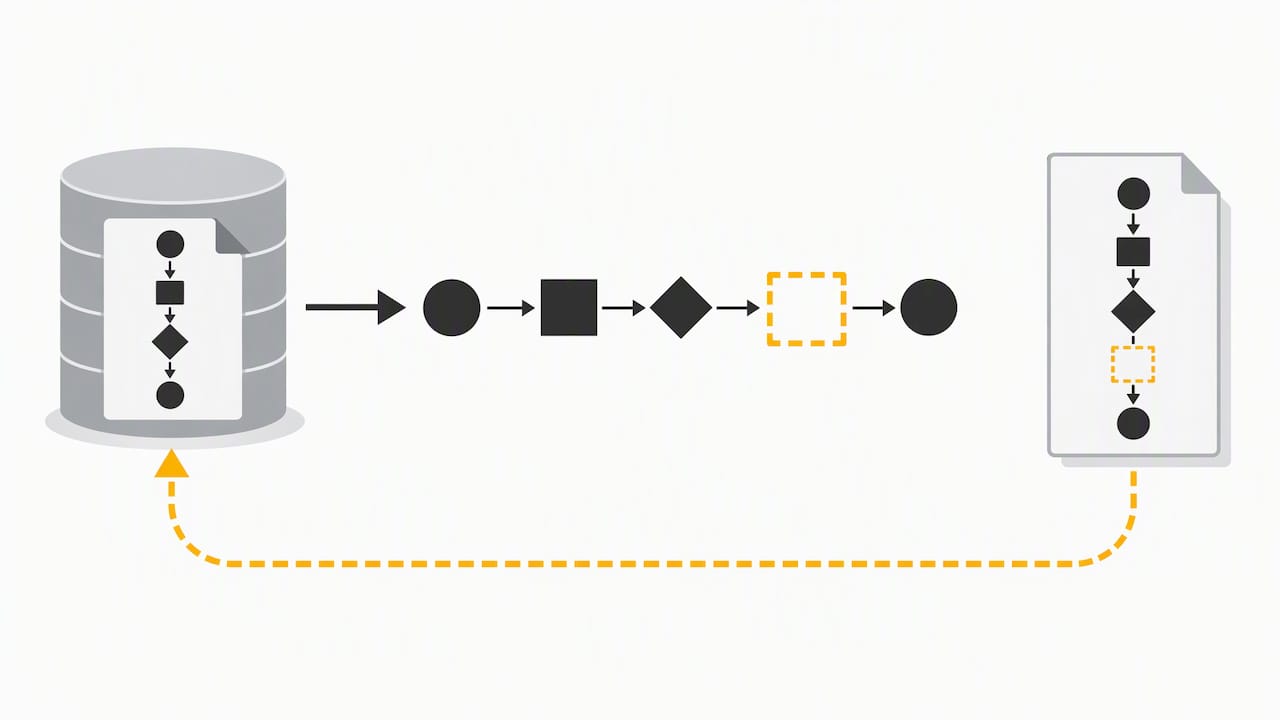
When a handoff fails, treat it like a systems problem. Google SRE’s troubleshooting method says to follow evidence, test one boundary at a time, and avoid jumping from a familiar symptom to a guess. Apply that sequence:
- Define the observable failure: what did the successor fail to do, and when?
- Gather context and reproduce it where possible.
- Isolate the first broken step by dividing the process into parts and testing them.
- Consult the documentation and the mentor to see which one failed to answer.
- Apply the lowest-effort safe fix first, such as a clarified step or a quick pairing session.
- Verify that the original task now succeeds, and record the evidence trail.
Apple and Google SRE guidance both recommend moving from low-effort checks to higher-impact interventions, escalating only when the cheap fix fails. Whether the cause is missing skill, a broken workflow, inaccessible documentation, or unclear ownership, the trail shows it.
How do you measure success without fooling yourself?
Attendance and document counts feel like progress and prove little. APQC warns against declaring success on attendance, document volume, or platform usage alone. Measure adoption and outcomes instead:
- Adoption: are people opening and applying the assets?
- Quality: are the assets accurate, relevant, and usable?
- Efficiency: time saved, reduced rework, and shorter cycle time.
- Outcome: the business result the transfer was meant to protect.
Pull these into one compact scorecard. APQC recommends combining adoption, quality, efficiency, and outcome measures so you can refine your approach and win leadership support. A scorecard that ties capture work to a business result is far easier to fund than one that counts files.
What does operationalized capture look like in practice?
Ideas become routine when someone owns them. NASA recommends assigning a leader or designee to coordinate capture and transfer, and that single decision does more than any tool. Here is what we recommend building around that owner:
- Run a gap inventory at the start of every role transition, not at the end.
- Use the same offboarding and onboarding templates every time, and add a short video debrief where judgment is involved.
- Fold capture into rhythms your team already has: weekly meetings, shift handoffs, and project closeouts.
When capture is part of normal work, it stops competing with the real job. For planned staffing changes, our outsourcing transition plan shows how to sequence handoffs so service holds steady.
Why transfer is really about continuity
I think most organizations file this under training and then wonder why it fails. Knowledge transfer is capacity management: the question is whether your operation keeps running when a specific person leaves. That reframing changes who owns it. It belongs to a leader with a name, a deadline, and a scorecard, not to HR as a side task. If nobody can say which critical knowledge is covered this quarter, the transfer is not happening, however many sessions are on the calendar.
— Daniela
How can a managed partner help you put this in place?
Capture work stalls when internal teams are stretched, and that is where we step in. We run managed team extension, managed customer support, and SOP management so documented procedures stay current and trained agents carry them into daily work. For healthcare operations, our patient support and SOP management service provides both.

Our team extension methods cover how this scales. If you want help turning your inventory into running processes, explore our services and tell us where the handoff is breaking. Current pricing details are on our site.
FAQ
What is a knowledge transfer checklist?
It is a short, repeatable list that makes sure critical knowledge moves from one person to the next. A good one covers an inventory of documents and contacts, a named owner, a mentor session, and a verification step. Standardized templates keep it consistent from one handoff to the next.
What are the common problems in knowledge transfer?
Typically the causes are unclear ownership, documents that are outdated or hard to find, and tacit judgment that never gets captured. Research on tacit knowledge points to missing definitions of success and missing processes as frequent culprits.
What is another way to say knowledge transfer?
Common alternatives include knowledge sharing, knowledge continuity, knowledge handoff, and knowledge capture. Each stresses a slightly different angle: sharing is ongoing, continuity is about keeping operations stable, and capture is the first step of getting it out of someone’s head.
What does knowledge transfer mean?
It is the deliberate process of moving practical know-how, such as procedures, judgment, and contacts, from the people who hold it to the people who need it. It works best when it is built into daily work rather than treated as a one-time event.