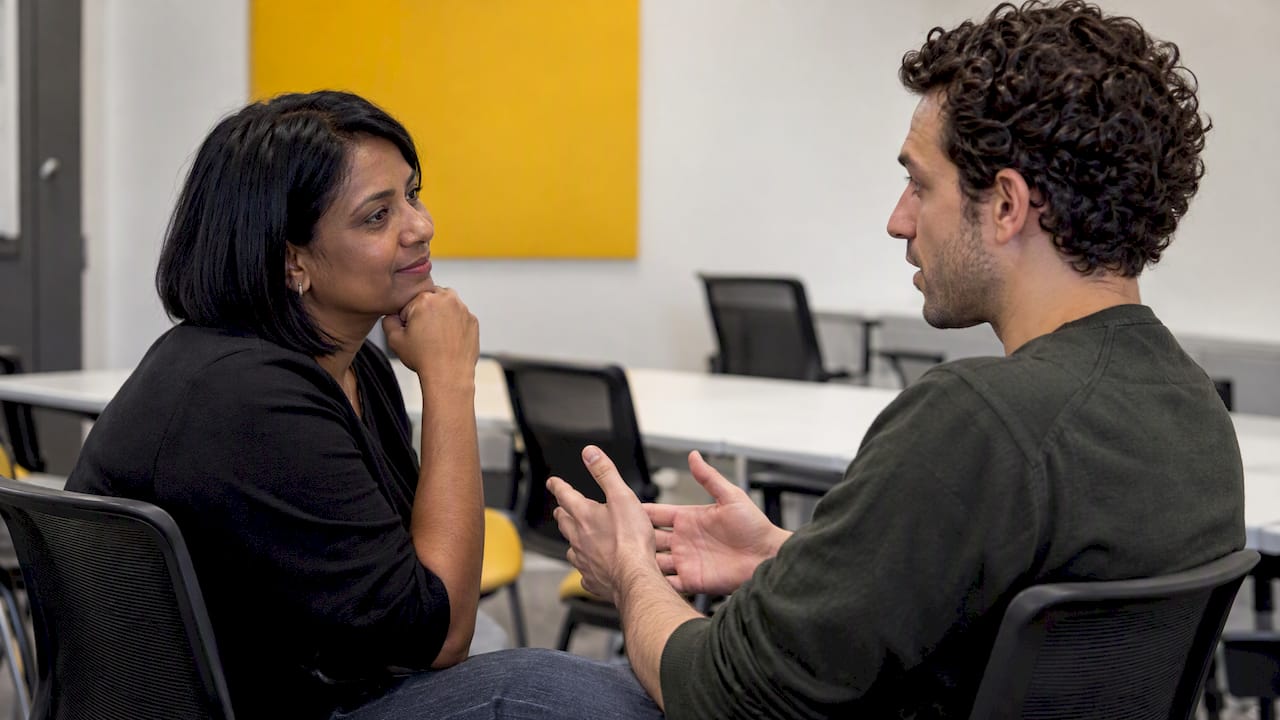
Train the trainer support is everything an organization does after the workshop ends: booster sessions, observation with feedback, coaching, peer learning, reference materials and measurement. A trainer who leaves a course with new skills but no follow-up often drifts back to old habits. The support around the course is what turns a newly trained trainer into a consistent one.
This guide is for operations leaders, CX directors and support managers who rely on internal trainers to onboard agents, transfer knowledge and keep quality steady. It covers what support should include, how to coach, how to support remote trainers, and how to measure results.
TL;DR
- Plan follow-up support before the course starts. The CDC describes five phases of follow-up support: planning, communication, implementation, evaluation and continuous improvement.
- Give every new trainer a facilitation manual, practice with feedback, and an action plan.
- Observe real sessions and give timely, specific, behavior-focused feedback.
- Use web-based booster sessions and discussion groups for remote or multi-site trainers.
- Measure beyond satisfaction: trainer behavior, learner performance and business outcomes.
Table of Contents
- Why the course alone is not enough
- What ongoing support for trainers includes
- Build the support into the program design
- Coaching and feedback that trainers can use
- Post-training support options that scale
- Supporting remote and multi-site trainers
- Security and compliance content in trainer programs
- Measuring whether trainer support works
- When trainers need a refresher
- Our perspective
- Put the support structure in place with Altiam CX
- FAQ
- Sources
Why the course alone is not enough
A train-the-trainer program prepares subject-matter experts to teach what they know. The hard part comes later, when a new trainer faces a real class, a difficult question and a full queue of work.
The U.S. Office of Personnel Management makes the point in its evaluation guidance: support systems must reinforce, monitor, encourage and reward critical behaviors, and training alone is not enough when workplace drivers are missing. A study of training professionals reached a similar conclusion: transfer efforts work best in the work context, during or after delivery, with trainers and supervisors both involved.
For a contact center or back-office team, this matters in a concrete way. Your trainers teach product knowledge, systems, call handling and quality standards. If their delivery varies, every new agent cohort learns something slightly different.
What ongoing support for trainers includes
The CDC’s follow-up support continuum lists options that range from light to intensive:
- Email reminders and newsletters
- Learning partners and discussion groups
- Conference calls and booster sessions
- Coaching and mentoring
- Walk-throughs with feedback
- Peer mentoring and professional learning communities
- Advanced training
Research by Harry J. Martin on follow-up identifies peer meetings, supervisory consultations, technical support, reference materials, in-house experts and outside advisors as mechanisms that promote transfer after training.
You do not need all of them. A practical starting stack for a support organization looks like this:
| Support layer | What it looks like | When |
|---|---|---|
| Reference materials | Facilitation manual, slide notes, job aids | Day one |
| Peer partner | A second trainer to compare notes with | First 90 days |
| Observation and feedback | Lead watches a live session and debriefs | First sessions, then periodic |
| Booster sessions | Short group calls on problems trainers report | After the course, then recurring |
| Advanced training | Deeper facilitation or content skills | When data shows a need |
Build the support into the program design
The CDC’s Training of Trainers model says a program should include a facilitation manual, modeling, skill practice with feedback, action planning and planned follow-up support. That list is a useful checklist for any internal program.
- Write the facilitation manual. It should cover objectives, timing, discussion prompts, activities and answers to the questions learners ask most.
- Model the delivery. Let new trainers watch an experienced trainer run a real module.
- Practice with feedback. Participants present activities or content and get feedback from peers and facilitators. The same CDC model recommends role-playing and practice sessions for this.
- Set an action plan. Each trainer leaves with the first sessions they will deliver, the support they will get and the dates of their first observation.
- Schedule follow-up. Put booster sessions and observations on calendars before the course ends.
The ATD recommends teach-backs, where new trainers present difficult content or activities and receive developmental feedback on their delivery. They work well for the topics that trip up every cohort, such as escalation rules or compliance scripts.
Coaching and feedback that trainers can use
The Agency for Healthcare Research and Quality gives clear guidance on coaching: observe, then give feedback that is timely, respectful, specific and focused on behavior. Good feedback reinforces what went well, explains how to improve, invites the trainer’s view and sets improvement goals.
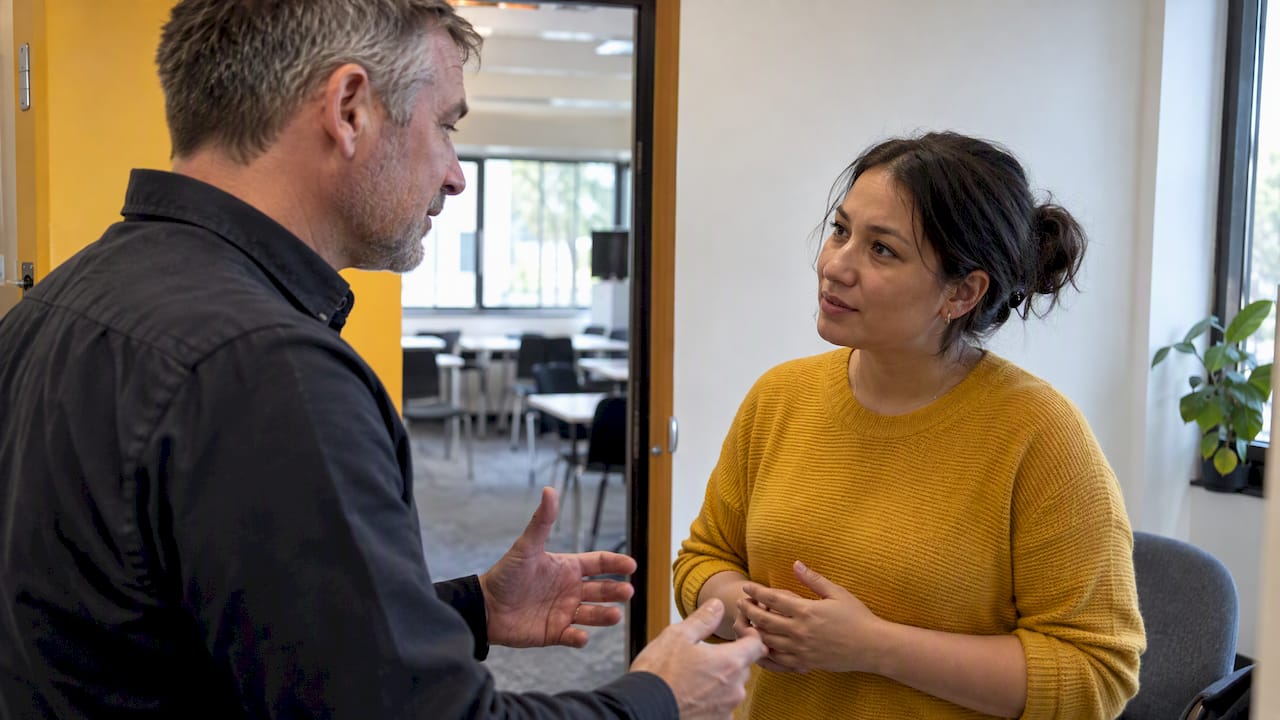
Cambridge English’s trainer framework adds that feedback should be clear, constructive and sensitive, with agreed action points. ATD also presents the situation-behavior-impact model and recommends feedback that balances positive and developmental input.
Here is how that sounds in a support environment:
- Situation: “In the refund-policy module this morning…”
- Behavior: “…you moved to the next slide before anyone tried the exercise.”
- Impact: “Two agents later asked the same question in the practice queue. Next time, let’s give them five minutes with the scenario first.”
Keep a simple observation form with three or four behaviors, such as clarity of explanation, use of practice, handling of questions and pacing. Use the same form across trainers so feedback stays comparable.
Managers matter here. The IFC’s guide on transfer of learning recommends coaching by a manager or mentor, job aids, discussion forums and extra practice opportunities. Martin’s research adds that supervisors and peers influence transfer through feedback, encouragement, reinforcement, practice opportunities and discussion of operational barriers.
Post-training support options that scale
Coaching, mentoring, peer learning and booster sessions all fit this stage. For leaders thinking about the human side of sustained performance, this overview of leadership resilience training covers micro practices that sit alongside coaching and peer learning.
OPM also lists web-based learning, shadowing, on-the-job training, rotational assignments, self-study and conferences as development opportunities that complement formal training. Its guidance says individual development plans should tie learning objectives to organizational goals. For trainers, that means a plan linking their growth to the metrics their cohorts are held to.
Supporting remote and multi-site trainers
If your trainers sit in different offices, time zones or countries, the CDC continuum recommends distance booster sessions by web or videoconference, email, online discussion groups or message boards, and learning partners.
A few habits make this work:
- Run one recurring booster call at a time that works across sites, and record it.
- Keep a shared channel where trainers post questions and the answers become part of the manual.
- Pair trainers across locations so each has a peer who teaches the same content.
- Standardize the observation form so remote and on-site trainers are judged the same way.
This is especially relevant for nearshore delivery, where trainers and operations leads may sit in different countries. Our guide to nearshore agent training explains how that coordination works, and the two-region pilot for follow-the-sun support shows how to avoid handoff gaps between teams.
Security and compliance content in trainer programs
Some content cannot vary from trainer to trainer. Security awareness is a clear example, since a trainer who skips a step on phishing or data handling creates real risk. A guide on building a phishing awareness program shows the kind of core components a strong train-the-trainer curriculum standardizes. Put such modules in the facilitation manual word for word, and check them first in observations.
Measuring whether trainer support works
OPM’s Training Evaluation Field Guide says evaluation should determine whether training met identified needs, learners mastered content, learning transferred to work and training contributed to the mission. It describes a chain from reaction and learning to behavior, application and outcomes, and suggests combining surveys and knowledge tests with observation, work review, manager validation, KPIs and pre/post or comparison data where feasible.
For a support operation, that translates into:
| Level | Question | Example measure |
|---|---|---|
| Reaction | Did learners find the session useful? | Post-session survey |
| Learning | Did they master the content? | Knowledge check |
| Trainer behavior | Is the trainer using the method? | Observation scores |
| Learner application | Are agents using it on the job? | Quality scores, call review |
| Outcomes | Did operations improve? | Time to competency, first-contact resolution, attrition |
Compare cohorts taught by supported trainers with earlier cohorts. Our articles on outsourced agent training and time to competency and call center onboarding that cuts attrition show which numbers to track.
When trainers need a refresher
The CDC continuum advises scheduling booster sessions after training and using observations with feedback, surveys and participant input on barriers to decide what follow-up comes next. In practice, trigger extra coaching when:
- Observation scores drop on a specific behavior
- Learners from one trainer’s cohort score lower on the same quality item
- A product, policy or system changes
- A trainer takes on a new audience or a new channel
When the same questions keep coming up, the problem is often a knowledge gap upstream. Our guide to troubleshooting knowledge transfer helps find the first gap.
Our perspective
We see the same pattern in nearshore support operations: the course is rarely where a trainer program fails. It fails in week three, when a new trainer has no one to ask, no observation scheduled and no shared standard for what good looks like.
That is why we treat trainer support as part of the operating model, not an add-on. Documented SOPs, a consistent coaching cadence and clear quality measures let a team grow without every new cohort learning something different. For healthcare, legal and financial services teams, where accuracy matters as much as speed, that consistency protects the customer experience.
Our managed team extension model is designed to give you that structure from the start, with bilingual teams working in your time zone and aligned with your processes. If you are building trainers internally, copy the framework above. If you would rather not build it alone, we can help.
Daniela
Put the support structure in place with Altiam CX
If your trainers are stretched or your cohorts are growing faster than your training capacity, Altiam CX can extend your team with nearshore agents and operational support built around your SOPs and quality standards. Our customer experience and managed team extension services cover onboarding, ongoing support and performance reporting. Healthcare teams can see our patient support and SOP management approach, and law firms can review our legal intake and team extension services.

For a deeper look at how team extension is rolled out, read our step-by-step team extension workflow and our customer service training tips.
FAQ
What is train the trainer support?
It is the set of activities that help newly trained trainers apply their skills after a course. It includes booster sessions, coaching, peer mentoring, observation with feedback, reference materials and evaluation. The CDC lists these among its follow-up support options.
How soon should a new trainer be observed?
Schedule the first observation before the course ends, so it happens during their first live sessions. Follow with periodic observations, and add booster sessions based on what you see. Timely feedback is a core feature of effective coaching, according to AHRQ.
Who should provide the support?
Use a mix: the trainer’s manager, an experienced peer or mentor, and subject-matter experts for content questions. Both the IFC guide and Martin’s research point to managers, mentors and peers as key sources of reinforcement.
How do I know the support is working?
Track trainer behavior through observation scores, then connect it to learner results such as quality scores and time to competency. OPM’s guide recommends combining surveys and tests with observation, KPIs and comparison data.
Sources
- Professional Development Follow-Up Support: The Continuum (CDC)
- Job Aid: Providing Follow-up Support to Laboratory Learners (CDC)
- Training Evaluation Field Guide (OPM)
- Career Development (OPM)
- Identifying Best Practices in Training Transfer (ERIC)
- Improving Training Impact Through Effective Follow-Up (Martin, 2010)
- Understanding the Training of Trainers Model (CDC)
- Implementation Coaching (AHRQ)
- Observation, feedback and assessment (Cambridge English)
- Trainers Need Training Too (ATD)
- Supporting the Transfer of Learning (IFC)