
Complaint management outsourcing works best when regulatory demands are rising faster than your internal team can scale, and it typically pays off through three measurable outcomes: tighter SLA compliance, a documented audit trail for every case, and capacity that flexes with complaint volume instead of breaking under it. Done right, it also converts frustrated customers into loyal ones. Done wrong, it hides accountability behind a vendor contract. The difference is in the operating model, and that’s what the rest of this article breaks down.
TL;DR:
- Outsourcing complaint management is most effective when complaint volumes are unpredictable, regulatory demands are rising, and internal capacity cannot scale quickly enough.
- A competent vendor follows a five-stage process: intake, triage, investigation, resolution, and follow-up, with strict documentation and escalation protocols for compliance.
- ISO 10002 standards and audit readiness are critical contract requirements to ensure transparency, accountability, and regulator-proof processes.
- Technology and AI tools improve complaint handling through automation of routine tasks, trend analysis, and sentiment monitoring, but never replace human judgment in high-stakes cases.
- A swift onboarding cycle (30 to 90 days) requires initial documentation, clear governance structures, and prepared complaint data to achieve measurable performance gains within a few months.
Table of Contents
- Why Outsource Customer Complaint Handling? The Business Case
- How Does Outsourced Complaint Resolution Actually Work?
- What Compliance Standards Apply to Outsourced Complaints?
- What Technology and AI Actually Improve in Complaint Handling?
- How Long Does Onboarding Take and What Drives Cost?
- What Do Complaint Management Engagements Actually Look Like?
- Should You Outsource for the Long Term or Just a Surge?
- Ready to Outsource Complaint Management? Here’s the Next Step
- Sources
- FAQ
Why Outsource Customer Complaint Handling? The Business Case
The decision usually comes down to three pressures hitting at once: staffing costs are climbing, complaint volumes are unpredictable, and regulators expect documentation your current systems weren’t built to produce.
Operational drivers top the list. Complaint volume rarely arrives in a straight line. A product recall, a billing system glitch, or a new regulation can triple your inbound complaint volume in a week. Building permanent headcount for that spike means paying for idle capacity the other 11 months of the year. An outsourced complaint resolution partner absorbs that variability without you carrying the fixed cost.
Quality drivers matter just as much, and they’re underdiscussed. An internal team investigating a complaint about its own department has an inherent conflict of interest, even when everyone acts in good faith. A third-party complaint management provider brings independent review and a consistent investigation methodology across every case, which regulators and customers both tend to trust more.
Financial drivers round out the case. Recruiting, training, and retaining specialized complaint handlers is expensive, and turnover in this role tends to run high because the work is emotionally demanding. Outsourcing converts that fixed cost into a variable one tied to actual case volume.
That said, outsourcing isn’t universally right. Keep complaint handling in-house when:
- Complaint volume is low and highly specialized, requiring deep product knowledge only your team holds
- Your industry’s regulatory framework requires complaints to be handled by licensed internal staff
- You’re still building the process maturity to know what “good” complaint resolution looks like for your organization
For most mid-sized and large organizations facing growth, regulatory pressure, or seasonal spikes, outsourcing complaint management resolves more risk than it introduces. Prompt, well-handled resolution has been shown to convert angry customers into loyal ones, which is a retention lever most companies underuse.
How Does Outsourced Complaint Resolution Actually Work?
A competent complaint processing service follows a repeatable five-stage path, and understanding each stage lets you audit a prospective partner instead of taking their pitch deck at face value.
- Intake. Every complaint enters through a standardized channel, whether phone, email, chat, or a web form, and gets logged in a ticketing system with a timestamp and unique case ID.
- Triage. Cases get scored by severity, regulatory sensitivity, and customer risk. A billing dispute and a safety complaint should never sit in the same queue with the same priority.
- Investigation. An assigned handler gathers evidence, reviews account history, and applies a documented investigation methodology rather than improvising case by case.
- Resolution. The handler proposes and executes a fix, communicates it to the customer, and records the resolution rationale for later review.
- Follow-up and learning. The case gets closed with a root-cause tag, and recurring issues get routed back to product or operations teams for remediation.
Effective triage rules aren’t vague. They specify exact thresholds: complaints involving potential harm or regulatory exposure escalate to a senior investigator within one hour; billing disputes under a defined dollar amount can be resolved by frontline handlers without escalation. An escalation matrix should name who owns each tier, not just describe the process abstractly.
Documentation standards matter more than most managers realize until an auditor asks for evidence. Every case file should include the original complaint text, all customer communications, the investigation notes, and the final resolution with a reason code. That handoff package is what lets your internal product or ops team actually act on the pattern instead of just archiving the complaint.
Pro Tip: Ask a prospective provider to walk you through one real (anonymized) case file end to end, including the SLA checkpoints where ownership shifted between teams. If they can’t produce one, their documentation discipline probably isn’t where it needs to be.
What Compliance Standards Apply to Outsourced Complaints?
ISO 10002 is the practical framework most audit-conscious organizations adapt for complaints handling, and it’s worth requiring from any provider you evaluate. The standard covers planning, operation, maintenance, improvement, and auditing of the complaints process, which gives you a shared vocabulary for contract negotiations instead of vague promises about “best practices.”
Core governance items to demand from any outsourced complaint management partner:
- Time-stamped audit logs for every case action, not just the final resolution
- Independent quality assurance review on a sample of closed cases each month
- A fixed reporting cadence (weekly operational, monthly compliance) with regulator-ready evidence packages
- Root-cause analysis reports tied back to product or policy teams
Contractually, require data access rights so you can pull your own complaint register at any time, audit rights allowing your compliance team to inspect the provider’s processes on notice, and SLAs that tie penalties to compliance outcomes, not just speed. A provider that closes cases fast but can’t produce a clean audit trail has solved the wrong problem.
Technology-enabled managed services increasingly close this gap fast. KPMG documents cases where AI-assisted summarization and automation helped clear roughly 3,000 complaints in six months while increasing the share of complaints closed within five days from 30.6% to 77.4%. That kind of jump only happens when governance controls and technology deployment move together, not when speed comes at governance’s expense.
What Technology and AI Actually Improve in Complaint Handling?
The baseline tech stack for any serious complaint processing service integrates a ticketing system, your existing CRM, and a shared knowledge base, so handlers never work from a fragmented view of the customer relationship.
Analytics output should go beyond a monthly summary. Expect root-cause dashboards that flag recurring product or policy issues, trend alerts when a specific complaint category spikes week over week, and voice-of-customer summaries that translate raw complaint text into patterns your leadership team can act on.
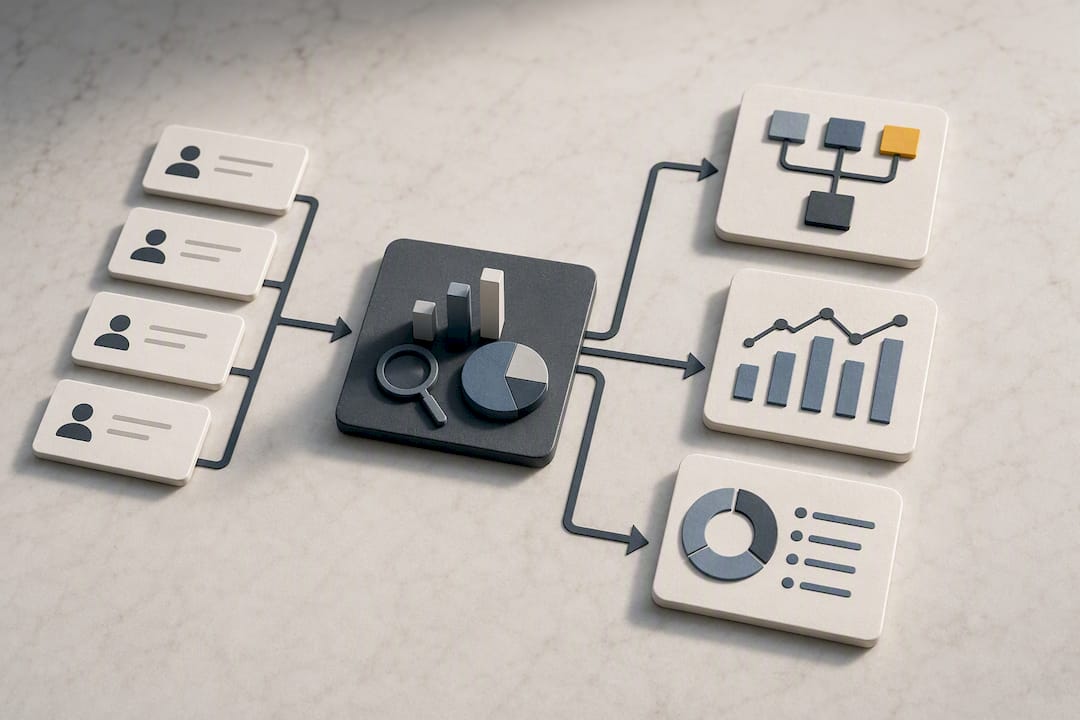
AI earns its place in specific, bounded tasks: summarizing long case histories, flagging sentiment shifts that suggest a complaint is escalating, and drafting first-pass correspondence for a human to review and send. What AI shouldn’t do is make final resolution decisions on regulated or high-stakes complaints. Industry specialists increasingly find the strongest partnerships pair automation with experienced human investigators rather than betting entirely on either.
Before signing anything, ask:
- Who owns the complaint data, and can you export it in full at contract end?
- How does the provider’s system integrate with your existing CRM without duplicate records?
- What security certifications govern data at rest and in transit?
How Long Does Onboarding Take and What Drives Cost?
Mobilization typically follows a 30/60/90-day arc. The first 30 days cover system integration, staff training, and backlog assessment. Days 31 to 60 focus on active backlog remediation alongside live case handling. By day 90, most engagements reach steady-state performance with full KPI reporting in place.
- Days 1 to 30: Data migration, escalation matrix setup, and shadowing existing staff to absorb institutional knowledge.
- Days 31 to 60: Backlog clearance begins while new complaints are handled live; early SLA metrics start to stabilize.
- Days 61 to 90: Full KPI reporting, quality assurance sampling, and governance reviews reach a normal cadence.
Pricing typically follows one of three models: per-seat (a fixed monthly rate per handler), per-hour (billed against actual case volume), or managed-service (a flat fee tied to defined outcomes like SLA compliance). Volume, complexity, and regulatory sensitivity all push price up or down within each model.
Short-term ROI is measurable well before the 90-day mark if you track SLA uplift and the value of remediated cases against the fees paid. Providers who bring clear process documentation and internal KPIs to onboarding tend to show measurable improvement within months rather than quarters.
What Do Complaint Management Engagements Actually Look Like?
Engagements that stabilize fastest share one trait: the client shows up with a complaint register export, current SLA definitions, sample case files, and a named governance sponsor for weekly steering. That single checklist item, a designated sponsor, often determines whether week one is productive or wasted on clarifying questions.
Reductions in average handling time and improvements in first-contact resolution tend to show up within the first two to three months once documentation is in order, not before. Before contacting a provider, prepare:
- Your last 12 months of complaint volume and category breakdown
- Current escalation matrix and SLA definitions
- A named internal owner for weekly governance calls
- Existing KPI reports, even informal ones
Pro Tip: Bring your worst month of complaint data to the first vendor conversation, not your average month. It’s the fastest way to see whether a provider can actually handle your ceiling, not just your baseline.
Altiam CX’s own case study on a software platform’s tech support migration illustrates what disciplined onboarding can produce when documentation arrives early and governance stays active.
Should You Outsource for the Long Term or Just a Surge?
Ongoing regulatory reporting requirements and steady, predictable complaint volume both point toward a long-term partnership, not a stopgap. Repeated short-term contracts create a quieter cost: every handoff loses institutional knowledge about your customers and your product’s failure points. Structure contracts with explicit knowledge-transfer clauses and a transition plan from day one, whether you expect the relationship to last one quarter or five years.
— Daniela
Ready to Outsource Complaint Management? Here’s the Next Step
A nearshore, technology-enabled complaint management service can provide organizations with audit-ready controls without the need to build that infrastructure from scratch. Such models commonly combine bilingual agents, aligned documentation practices, and measurable performance frameworks to help organizations balance compliance and speed.

These solutions are designed for operations leaders, CX directors, and compliance-conscious teams in industries such as healthcare, legal, ecommerce, and financial services who are considering outsourcing and evaluating potential partners. The case study documenting a tech support migration shows what a disciplined onboarding process can produce when governance and speed move together. If you’re preparing to evaluate vendors, a critical support function outsourcing checklist can help you organize documentation before the first call. When you’re ready, request a discovery call and bring your complaint register, current SLAs, and last twelve months of volume data. That’s what turns a sales conversation into a real diligence process.
Sources
- Managed Services for Complaints Handling | KPMG UK
- ISO 10002:2018 - Quality management — Customer satisfaction — Guidelines for complaints handling in organizations
- How to Handle Customer Complaints: A Guide for Small Businesses | CO- by US Chamber of Commerce
- How customer service can turn angry customers into loyal ones | HBR
FAQ
What Are the Five Stages of Complaint Handling?
Most frameworks, including practices aligned with ISO 10002, break complaint handling into intake, triage, investigation, resolution, and follow-up, where the final stage feeds root-cause data back to product and operations teams.
What Are the Four Types of Customer Complaints?
Complaints generally fall into four categories: product or service quality issues, billing or pricing disputes, delivery or timing failures, and behavior or communication complaints about staff interactions.
Can a Customer Complaint Get an Employee Fired?
A single complaint rarely leads to termination on its own; it typically takes a documented pattern of policy violations or serious misconduct confirmed through a formal investigation process.
What Is Complaint Management?
Complaint management is the structured process an organization uses to receive, investigate, resolve, and learn from customer complaints, ideally supported by consistent documentation and measurable KPIs like first-contact resolution and SLA compliance rates as outlined in US Chamber guidance.
How Do I Choose a Complaint Management Outsourcing Provider?
Evaluate providers on documented investigation methodology, ISO-aligned governance controls, technology integration with your existing CRM and ticketing system, and evidence of measurable outcomes from a comparable engagement, such as a published case study.