
A prior authorization is a payer’s approval, obtained before certain services or drugs, without which your insurer may not pay the claim. Getting it right the first time avoids weeks of delay: under CMS’s 2026 interoperability rule, most standard requests now get a decision within 7 days, expedited ones within 72 hours, and most initial denials get overturned when you push back.
TL;DR:
- Most prior authorization decisions under CMS-0057-F are scheduled within 7 days for standard requests and 72 hours for expedited ones, starting in 2026.
- Incomplete documentation, complex cases requiring specialist review, and misrouting often delay approval beyond the mandated timeframes.
- Electronic prior authorization systems can reduce initial denial rates by over 60% and cut approval times by roughly one-third, but automation still faces limits with complex cases.
- Outsourcing PA coordination to dedicated back-office teams can significantly improve processing speed and reduce staff burnout.
Table of Contents
- What Is the Prior Authorization Process, and Why Do Insurers Require It?
- How Does the Prior Authorization Workflow Actually Run?
- How Long Does a Prior Authorization Decision Take?
- What Happens When a Prior Authorization Gets Denied?
- A Practical Checklist to Speed Up Your Prior Authorization
- Will Electronic Prior Authorization Actually Fix the Delays?
- How Practices Actually Manage the Prior Authorization Workload
- Get Ahead of Prior Authorization Delays
- Sources
What Is the Prior Authorization Process, and Why Do Insurers Require It?
You may also hear it called precertification, prior approval, or pre-cert. All three mean the same thing: your health plan wants to review a planned service, procedure, or medication before agreeing to cover it. If your provider skips this step when it’s required, you could end up owing the full bill yourself, even with good insurance.
Insurers built this system around a few goals. They want to confirm a treatment is medically necessary, that it matches clinical guidelines, and that it isn’t duplicative or unusually expensive compared with an equally effective alternative. Payers use it to steer care toward preferred pharmacies, in-network facilities, or lower-cost settings, and to catch coding or eligibility problems before they become billing disputes.
The tradeoff is real friction for patients and clinics alike. The prior authorization process is time-intensive and creates administrative burden for providers, and that burden often translates directly into delayed care for the patient waiting on an MRI, a specialty drug, or a scheduled surgery.
Common categories that typically trigger a PA requirement include:
- Advanced imaging like MRIs, CT scans, and PET scans
- Planned or elective surgeries
- Durable medical equipment such as wheelchairs or CPAP machines
- High-cost specialty medications and biologics
- Out-of-network referrals or certain specialist visits
One exception matters enormously: emergency care generally does not require prior authorization. If you’re in the ER with a life-threatening condition, insurers cannot legally hold that care hostage to a PA review.
How Does the Prior Authorization Workflow Actually Run?
The path from “your doctor orders something” to “your insurer says yes” follows a consistent five-step pattern, even though the paperwork behind each step varies by payer.
- Determine whether PA is needed. Your provider’s staff checks the payer’s medical policy or portal to confirm the specific CPT or drug code requires authorization.
- Gather documentation. This typically means CPT and ICD-10 codes, the ordering provider’s NPI, recent clinical notes, imaging or lab results, prior therapy history, and sometimes a letter of medical necessity.
- Submit the request. Channels include the payer’s web portal, an EDI 278 transaction, electronic prior authorization (ePA) built into the EHR, or, when nothing else works, fax and phone.
- Monitor status. Someone has to actually check the portal or call, because payers rarely proactively update requesters.
- Receive the decision and act on it. Approved, denied, or “pended” for more information, each outcome triggers a different next move.
Submission channel matters more than most patients realize. Portal and ePA submissions get logged with timestamps and are far easier to track than a fax that vanished into a payer’s queue. If your provider’s office still leans on fax for PA, ask why. It’s usually a sign their systems aren’t integrated with the payer’s electronic workflow yet, an issue worth raising directly since it affects how fast you get care.
The documentation packet is where most delays start. A complete file typically includes the CPT and ICD-10 codes, the treating provider’s NPI, progress notes justifying the request, records of any prior therapies tried and failed, and a letter of medical necessity for anything unusual or high-cost.
Pro Tip: If your situation is urgent, don’t wait for the standard queue. Ask your provider explicitly to mark the request as “expedited” and to state the clinical reason (worsening symptoms, time-sensitive treatment window) directly on the submission. Vague urgency claims get processed like routine ones.
How Long Does a Prior Authorization Decision Take?
Under CMS-0057-F, impacted payers must decide standard prior authorization requests within a week and expedited requests within roughly three days, starting in 2026.
That timeline comes from the CMS Interoperability and Prior Authorization Final Rule, which also requires those payers to build Prior Authorization APIs so providers can check status electronically instead of guessing. These federal timeframes apply to the payer types covered by the rule, which include Medicare Advantage, Medicaid managed care, and certain ACA marketplace plans. Commercial employer plans outside that scope, and some state-regulated products, can still run on different clocks set by state insurance law, so it’s worth confirming which rule actually governs your specific plan.
Several factors stretch a review beyond the baseline window:
- Missing or incomplete documentation, which restarts the clock once resubmitted
- Complex cases requiring specialist-level clinical review rather than automated approval
- Requests that get misrouted to the wrong department or vendor
- High patient volume during seasonal surges, particularly around plan-year changes in January
Track your own deadline the moment the request goes in. Note the submission date, the channel used, and any confirmation or reference number. If you hit day 5 on a standard request with no word, call and ask for a status update; don’t wait for day 7 to find out something stalled on day 2.
What Happens When a Prior Authorization Gets Denied?
Roughly a quarter of prior authorizations are denied on the first pass, but that number tells only half the story. Over 80% of initial denials in one analysis of Medicare Advantage plans were overturned on appeal. A denial is a starting point for a conversation, not a final verdict.
Most denials trace back to a handful of causes:
- Incomplete or missing clinical documentation
- A payer’s determination that the requested service isn’t “medically necessary” under its specific criteria
- Eligibility problems, like a lapsed policy or coverage that doesn’t include the requested provider
- Coding errors, including mismatched CPT and ICD-10 codes
Your response depends on why you were denied. If the reason is a documentation gap, a corrected resubmission with the missing piece attached is usually faster than a formal appeal. If the reason is a substantive medical necessity dispute, you need the appeal track, and often a peer-to-peer review first.
A peer-to-peer review puts your treating physician on the phone directly with the payer’s medical director. It sounds bureaucratic, but experts recommend requesting one because clinician-to-clinician conversation frequently resolves misunderstandings that a written denial letter never captures. If the peer-to-peer doesn’t resolve it, you move to a formal internal appeal, and if that fails, an external review conducted by an independent reviewer outside the insurance company, or a complaint filed with your state insurance department.
Pro Tip: Ask your provider’s office to request the peer-to-peer review within 24 hours of the denial. The physician who ordered the treatment, not an office manager, needs to be the one on that call. Payers weigh clinician-to-clinician input differently than administrative back-and-forth.
A Practical Checklist to Speed Up Your Prior Authorization
Use this with your provider’s office rather than relying on them to run it alone; for detailed guidance on provider billing and reimbursement strategies, see How to Bill for Socket Preservation: ADA codes & reimbursement. Being an informed second set of eyes shortens delays more than almost anything else you can do.
- Confirm PA is actually required, and ask which vendor or portal handles it, since some payers delegate authorization to a separate benefits manager.
- Assemble a complete packet before submission: your member ID, the specific CPT/ICD-10 codes, recent clinical notes, relevant labs or imaging, dates of any prior therapies tried, and a letter of medical necessity if the request is unusual.
- Submit through the strongest available channel, prioritizing the payer portal or ePA over fax, and get an authorization or reference number in writing.
- Record the authorization number, submission date, and expiration date. Approvals often expire in 60 to 90 days; scheduling outside that window can force a brand-new request.
- Set a follow-up cadence: check status at day 3 to 4 for standard requests, escalate by day 6, and request expedited handling immediately if your clinical situation changes.
| Checklist item | Why it matters |
|---|---|
| Confirm PA requirement and vendor | Avoids submitting to the wrong portal or missing a delegated administrator |
| Complete documentation packet | Incomplete submissions are the leading cause of denial |
| Preferred submission channel | Portal and ePA submissions are trackable; fax often isn’t |
| Recorded authorization number | Needed for claims processing and scheduling |
| Follow-up schedule | Catches stalled requests before the deadline passes |
A tool like streamlined patient support processes can help a practice keep this cadence consistent across every open authorization, not just the urgent ones a staff member happens to remember.
Will Electronic Prior Authorization Actually Fix the Delays?
Electronic prior authorization, or ePA, connects your provider’s EHR directly to the payer’s system through a standardized API instead of a portal login or fax machine. Under CMS-0057-F, this becomes a requirement for impacted payers, which means “real-time” status checks start becoming an actual feature rather than a marketing phrase for a growing share of routine requests.
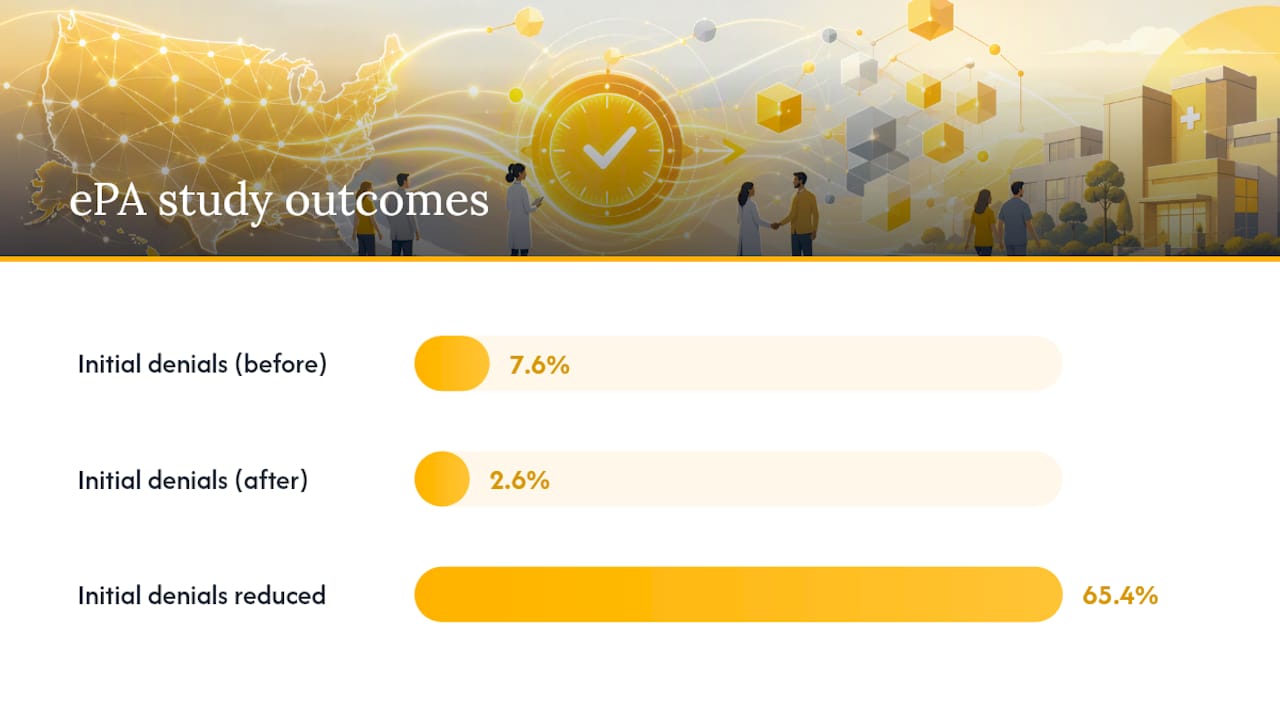
The evidence for automation’s impact is specific and measurable. One quality improvement study found that integrating an automated PA support system into clinical workflow reduced initial denials by a mean of 65.4% and cut median time to authorization by about 33.9%, with denial rates dropping from 7.6% to 2.6% and median turnaround falling from 4.2 to 2.8 business days.
Automation still has limits worth knowing:
- It flags missing data fields before submission but can’t judge genuinely borderline medical necessity calls
- Complex clinical narratives in unstructured notes still need a human reviewer on both sides
- Smaller or slower-to-modernize payers may lag well behind the API mandate’s spirit even after the compliance deadline
Expect faster status visibility over the next few years, not instant approvals for everything.
How Practices Actually Manage the Prior Authorization Workload
Behind every PA request sits a staff member, often a referral coordinator or back-office specialist, juggling dozens of open cases across multiple payer portals. That’s the operational reality Altiamcx sees across healthcare clients: PA coordination is repetitive, deadline-driven work that burns out generalist staff fast.
That’s why many practices route authorization coordination to dedicated back-office teams or outsourced patient support partners, freeing clinical staff to focus on care instead of portal logins.
If your provider outsources this function, it’s fair to ask about their HIPAA compliance safeguards and how they measure turnaround time. Those two questions tell you whether PA handling is a genuine priority or an afterthought.
— Daniela
Get Ahead of Prior Authorization Delays
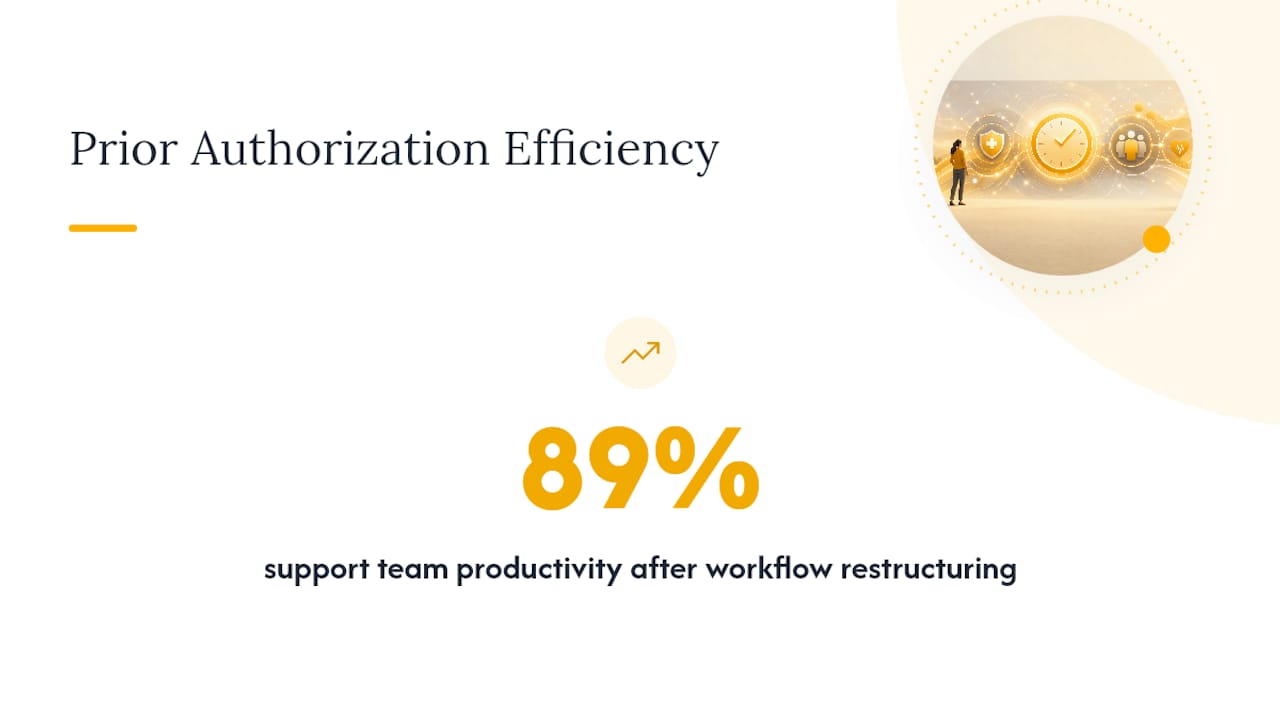
The friction in prior authorization rarely comes from the rule itself. It comes from incomplete packets, missed follow-ups, and staff stretched too thin to track every open request across a dozen payer portals. That’s a staffing and process problem, and it’s exactly what Altiamcx’s back-office and patient support teams solve every day for healthcare organizations. One case study documented a client improving support team productivity by 89% after restructuring how administrative workflows, including authorization-heavy processes, moved through their operation.
If your practice is buried in PA follow-ups, denial appeals, and documentation chasing, it’s worth exploring how a dedicated nearshore team handles that volume without adding full-time headcount. Altiamcx builds these teams specifically for healthcare operations that can’t afford to drop the ball on a patient’s coverage.
This article is general information, not a substitute for advice from a qualified doctor. Consult a qualified healthcare professional about your own circumstances before acting on anything here.
Sources
- Prior Authorization Application Programming Interface Workflow — CMS (CMS-0057-F)
- Prior authorization: what is it, when might you need it, and how do you get it — Harvard Health
- An Overview of the Challenging Process of Prior Authorization: Medical Necessity for a Better Way — PMC
- Prior Authorization — Cleveland Clinic
- If a prior authorization is denied, experts recommend a peer-to-peer review — NBC News