
Sourcing a customer experience outsourcing partner that can deliver measurable gains in satisfaction, multilingual coverage, and regulatory compliance without unpredictable costs is harder than expected for most procurement teams. Most agencies either avoid publishing pricing, require lengthy custom scoping, or lack transparent third-party reviews, which delays fast procurement cycles and makes vetting quality difficult. This comparison covers deployment speed, language fit, pricing models, and sector alignment so you can select a CX outsourcing agency matched to your team’s timeline, coverage needs, and compliance priorities.
Table of Contents
- Altiam CX
- Support Services Group
- WOW24-7
- RCC BPO
- Comparative Analysis of Customer Experience Outsourcing Solutions
Altiam CX
At a Glance
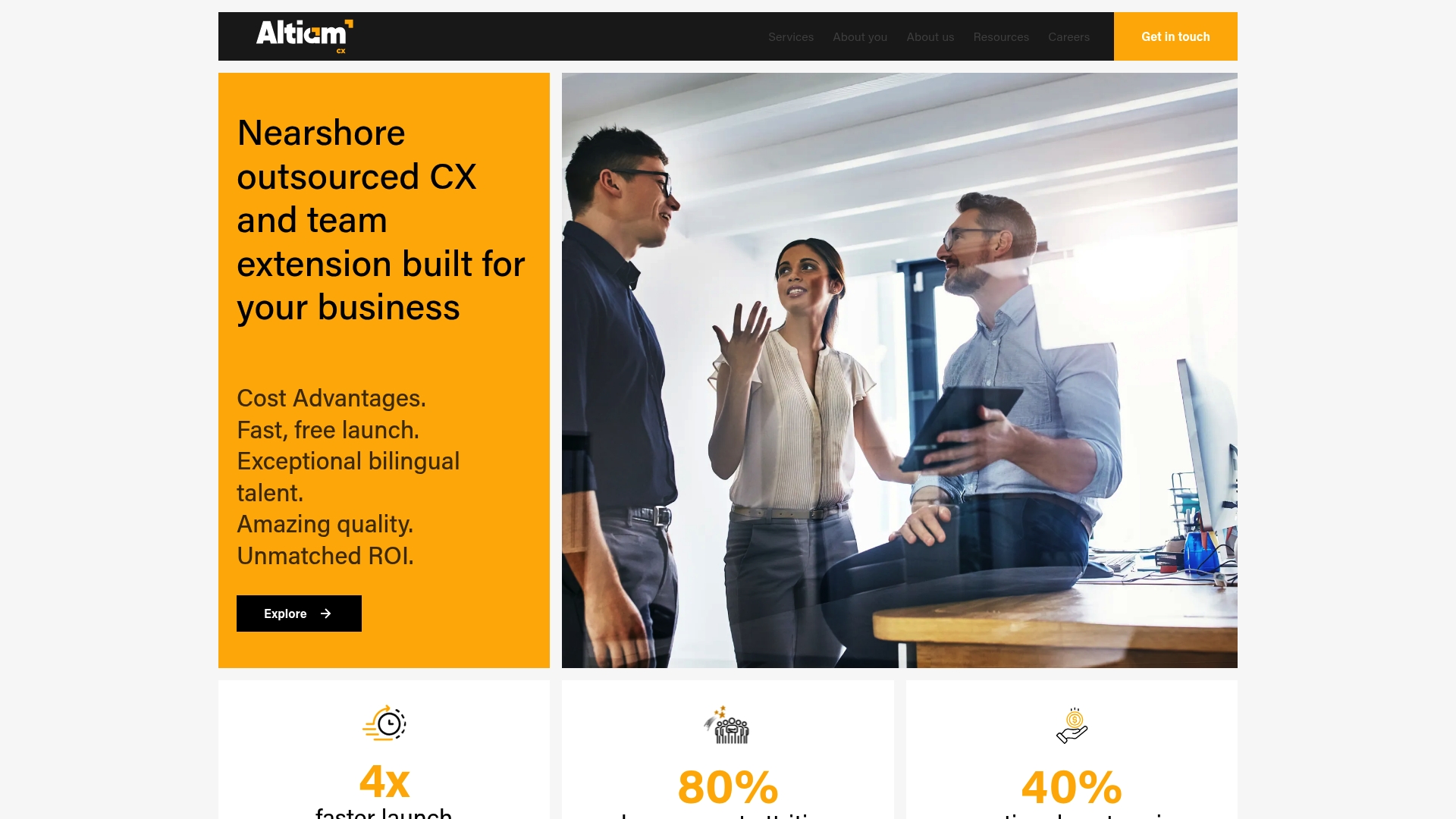
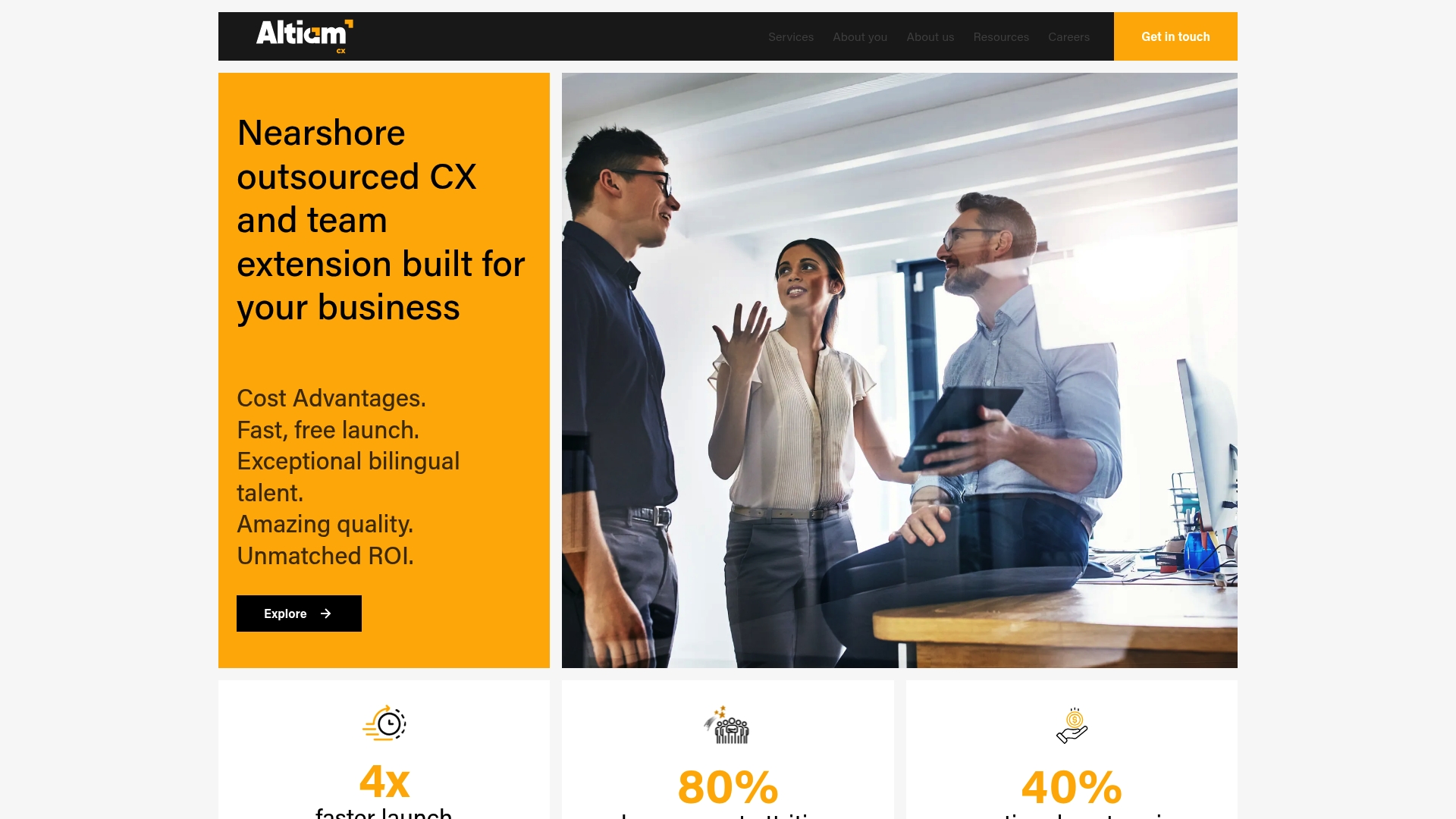
The vendor’s marketing materials state a healthcare partner improved patient support CSAT by 41% and reduced operational costs by 40% after working with Altiam CX. That case study anchors the offering: nearshore teams, bilingual agents, and rapid scaling for time-sensitive support needs.
Core Features
- Nearshore CX and team extension services that emphasize cost savings while keeping operations close to North American hours and expectations.
- Bilingual, culturally aligned talent sourced from Latin America to match tone and context for English-speaking customers.
- Rapid deployment and flexible scaling to handle seasonal spikes or product launches without long procurement cycles.
- Altia Smart City workspaces that the vendor highlights as sustainable, secure, and optimized for employee wellbeing.
- Structured talent sourcing, screening, and employee development to preserve service continuity as teams expand.
Key Differentiator
Highly culturally aligned bilingual talent from Latin America combined with fast deployment timelines. That pairing reduces the friction most buyers face when moving support overseas because the teams are intentionally matched to North American customer expectations rather than treated as generic offshore resources.
Pros
- Strong cost advantage compared to domestic providers. The sourcing model commonly lowers labor cost per seat while keeping overlap with North American schedules for live support.
- High-quality bilingual talent with language and cultural affinity. This reduces repeat contacts and shortens average handle time for language-sensitive issues.
- Fast setup times and flexible scaling. Teams can ramp for a seasonal peak or a product launch in days to weeks instead of months.
- Employee wellbeing programs and dedicated client success support. That focus lowers turnover risk and preserves knowledge in complex verticals like healthcare.
- Vendor case studies show measurable CSAT and efficiency gains. The case above provides a concrete example buyers can use in their RFPs.
Cons
- Pricing is not published and is scoped to individual client requirements, which means initial proposals require a discovery process and may slow fast procurement cycles.
Who It’s For
Growing businesses, large organizations, and tech firms that need bilingual nearshore customer experience capacity with short ramp times. Particularly relevant for healthcare, retail, legal, and SaaS companies serving North American customers.
Unique Value Proposition
Altia Smart City workplaces plus a nearshore talent pipeline let you spin up bilingual teams quickly while preserving cultural alignment. That combination shortens time to live and reduces the operational disruption that often comes with remote outsourcing moves.
Real World Use Case
A healthcare provider used Altiam CX to scale support for a product launch. According to the vendor’s case study above, the engagement lifted patient support CSAT by 41 percent and cut operational costs by 40 percent while handling a surge in inquiries.
Pricing
Pricing is quoted per engagement and depends on scope, headcount, and service level. The vendor does not publish standard tiers; expect a discovery call and a bespoke proposal tailored to volume, hours of coverage, and training requirements.
Website: https://altiamcx.com
Support Services Group
At a Glance
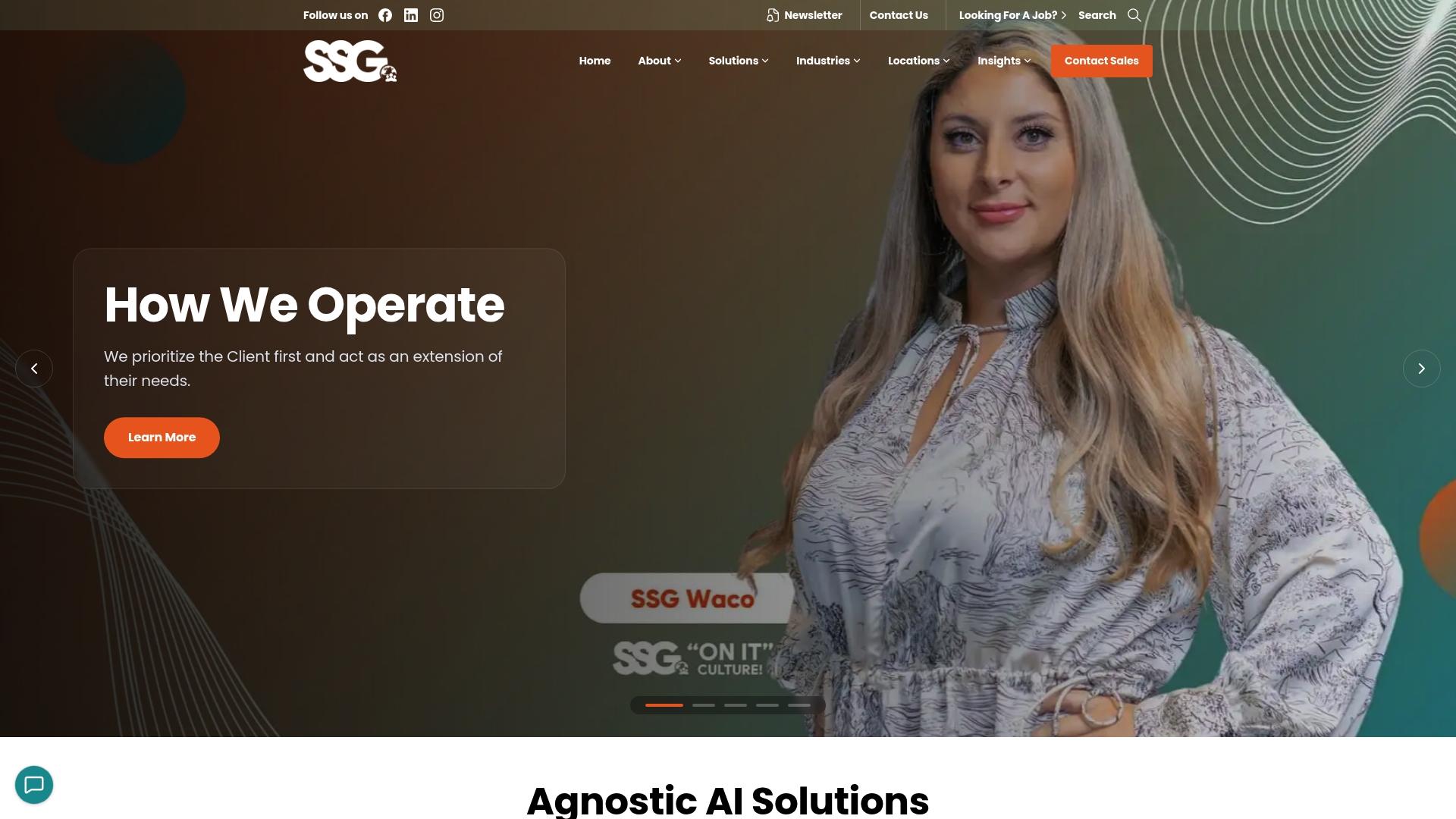
The vendor reports a footprint of 17 locations across 9 countries and a leadership team claiming over 200 years of combined experience, positioning Support Services Group as a global BPO with deep bench strength. That scale is the first thing clients notice during procurement.
Core Features
- Omnichannel customer support covering voice, chat, email, and social for consistent cross-channel handling.
- AI and speech analytics that feed agent coaching and quality programs with automated insight extraction.
- Business intelligence dashboards for near real-time operational visibility and performance tracking.
- End-to-end contact center services including WFO, compliance, workforce enablement, and agent training.
Key Differentiator
SSG combines a reported global footprint with a technology-agnostic approach, which lets them stitch together legacy telephony, cloud contact center platforms, and bespoke AI without forcing a single vendor stack. That flexibility, paired with the leadership claim above, shapes tailored programs rather than one-size implementations.
Pros
- Strong global reach reported across multiple continents gives you local language support while keeping governance centralized.
- Deep sector experience across retail, healthcare, media, and financial services helps shorten ramp time for regulated programs.
- The vendor advertises an open architecture and customizable tech stack, which reduces vendor lock-in for IT teams.
- Leadership depth feeds continuous improvement frameworks and strategic road maps rather than point fixes.
- End-to-end capability means you can combine WFO, compliance, and analytics under a single operations umbrella.
Cons
- There are no third-party user reviews included in the material, so independent satisfaction signals are missing.
- Large scopes and customized solutions imply a heavier onboarding and integration effort for internal IT and process teams.
- Public pricing is not provided, which lengthens procurement cycles for buyers who need a quick budget check.
When It May Not Fit
If you are a small support team or an early-stage company that needs a fast, low-cost pilot, SSG’s scale and tailored approach may be overprovisioned. If you need immediate published rates for a budget bid, the sales-first pricing model will slow your timeline.
Who It’s For
Large and mid-sized enterprises requiring scalable contact center services, multilingual support, and digital transformation across regions. Procurement, operations, and IT leaders looking for a single BPO partner to manage compliance and analytics will find SSG aligned with those priorities.
Real World Use Case
A healthcare provider engaged SSG to operate multilingual patient support, deploy AI-driven call tagging, and unify reporting across countries. The program combined agent training, speech analytics, and BI dashboards to improve schedule adherence and reduce average handle time.
Pricing
Pricing is not published; the vendor lists pricing as informational only. Expect a proposal-driven model with customized statements of work that reflect scope, languages, and compliance requirements rather than fixed public tiers.
Website: https://supportservicesgroup.co
WOW24-7
At a Glance
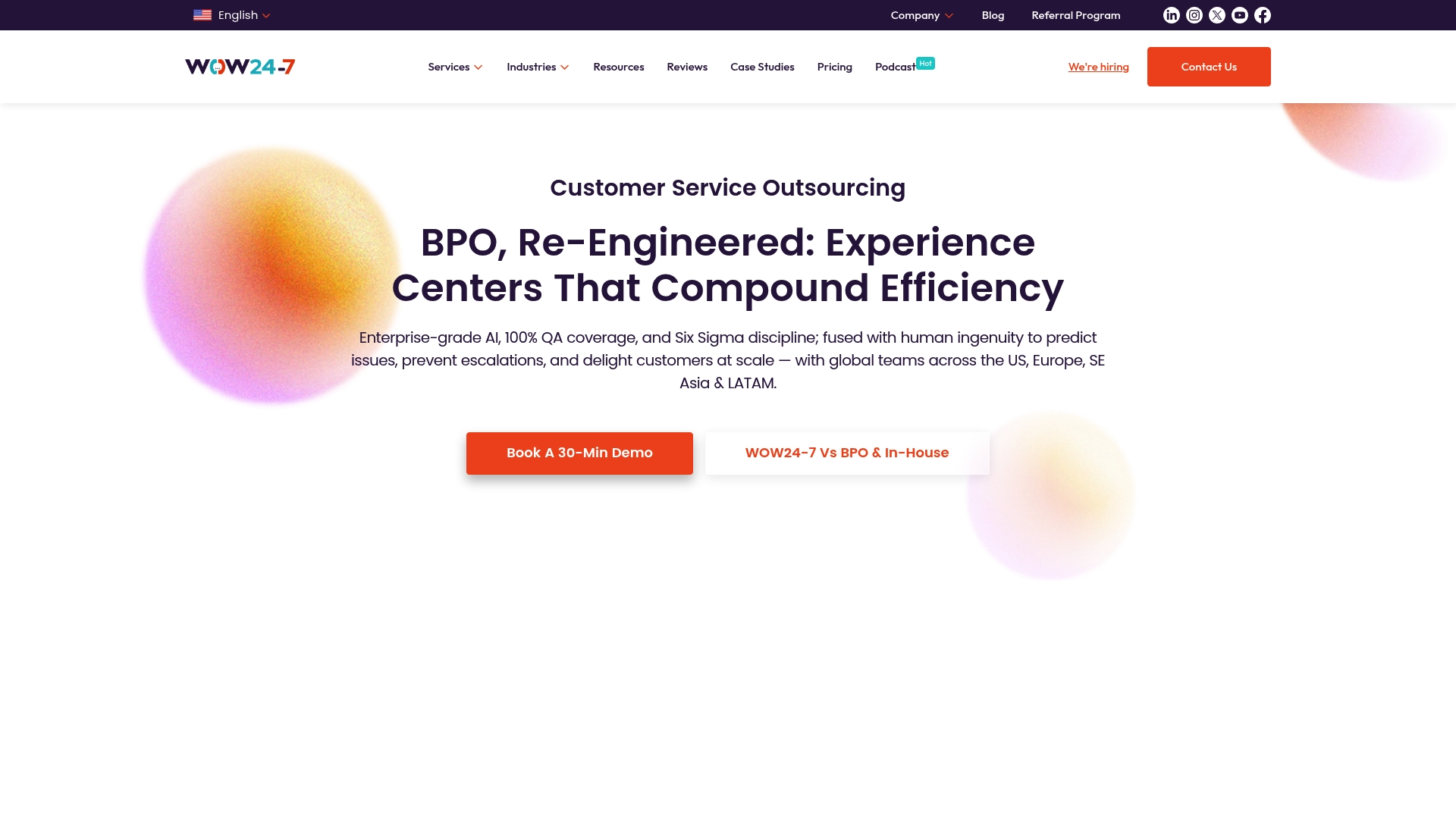
WOW24-7 advertises dedicated teams starting at $10.5/hr and shared packages from $1,490/month, with an operating model built around physical and virtual Experience Centers. The vendor positions real-time analytics and Six Sigma governance as the backbone of its performance and quality approach.
Core Features
Experience Centers that combine trained agents with enterprise AI and automation for voice, chat, email, social, and marketplace channels.
Real-time performance management, predictive analytics, and interaction insights that feed continuous improvement cycles and 100% QA coverage claims.
Customizable onboarding, workflow adaptation, and integration capabilities to work alongside existing CRMs and support tools.
Key Differentiator
WOW24-7 pairs agentic AI with process discipline from Six Sigma to make performance measurable rather than anecdotal. That mix aims to reduce variance in agent output and make analytics part of daily operations, a practical approach for teams that want data-driven quality control instead of ad hoc scorecards.
Pros
-
Highly responsive team focus; the vendor highlights fast ramp and hands-on customer care, which suits early-stage support programs that need quick stability.
-
Six Sigma governance and advanced analytics create a structured quality framework rather than informal QA sampling, which helps leaders who track process metrics.
-
Global footprint across the US, Europe, LatAm, and Asia lets you scale multilingual coverage and follow-the-sun support.
-
Flexible delivery models including dedicated teams or shared resources let you match headcount and cost to workload.
-
Emphasizes compliance and security standards, reducing procurement friction for regulated industries.
Cons
-
Public case studies and independent reviews are limited, which makes objective assessment of scale and deployment cadence harder.
-
Integration with proprietary or highly customized legacy systems may be challenging; the vendor notes adaptation but stops short of detailed platform lists.
-
Pricing varies by scope and customization, so expect a discovery cycle and tailored quote for anything beyond standard packages.
When It May Not Fit
If you need immediate, fully documented third-party references for rapid procurement approval, the sparse public feedback could slow internal signoff.
If your environment runs highly bespoke middleware or legacy switches, integration risk may drive you to an incumbent with certified connectors rather than a team that adapts through custom engineering.
Who It’s For
CX and support leaders at mid-size to large enterprises that want to convert support into a measurable operation using analytics, process control, and multilingual global capacity. Best for teams planning phased rollouts rather than one-week lift-and-shift migrations.
Real World Use Case
According to the vendor, a SaaS customer reduced support costs by 20% while increasing CSAT to over 96% by adopting WOW24-7’s Experience Center model with AI automation and multi-region coverage. That case illustrates how analytics plus disciplined QA can shift both cost and satisfaction when executed end to end.
Pricing
Custom pricing based on support model and volume. The vendor lists dedicated teams from $10.5/hr, shared packages starting at $1,490/month, and bespoke solutions quoted after scoping.
Website: https://wow24-7.com
RCC BPO
At a Glance
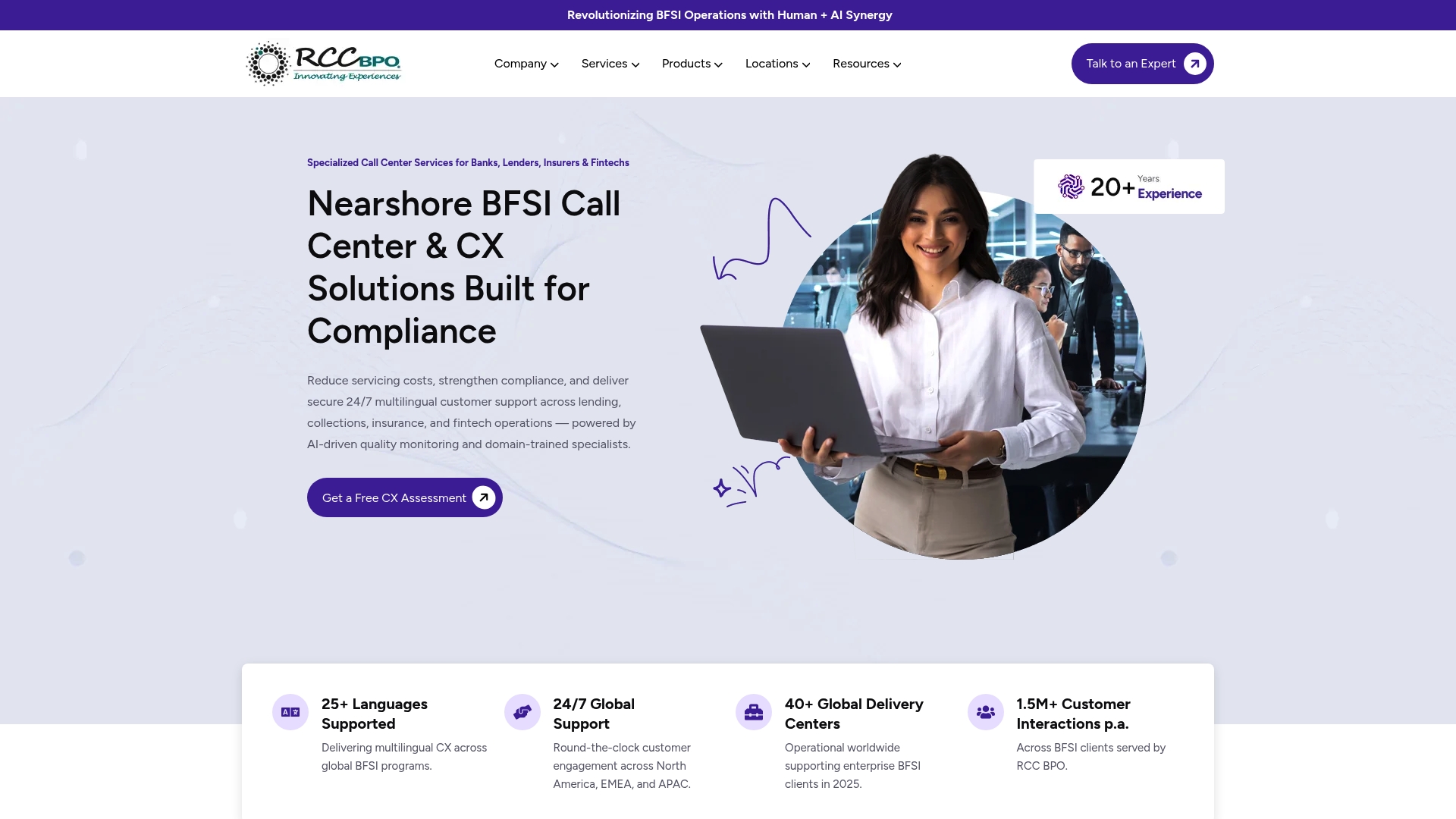
RCC BPO’s marketing materials state it operates over 40 delivery centers and supports 25+ languages, handling more than 1.5 million customer interactions annually. That scale is framed around regulated financial services and multilingual contact center work.
Core Features
-
Multilingual customer support across lending, collections, insurance, and fintech sectors.
-
24/7 global coverage spanning North America, EMEA, and APAC, with local-language agents and follow-the-sun shifts.
-
AI-driven quality monitoring and regulatory adherence tooling paired with domain-trained specialists to manage sensitive financial conversations.
-
Security and compliance built to meet standards such as ISO 27001, SOC 2, and PCI DSS as claimed in vendor materials.
Key Differentiator
RCC BPO combines proprietary AI tooling with staff who have deep BFSI experience. That blend is designed to keep compliance checks and conversation coaching inside the workflow rather than as separate audits, which reduces rework for regulated transactions.
Pros
-
Deep BFSI focus reduces onboarding friction for banks and lenders. Teams familiar with lending and collections translate to faster ramp for regulated processes.
-
Proprietary AI tools augment quality assurance. The system flags compliance risks and agent coaching moments, which helps managers prioritize interventions.
-
Large global footprint supports multilingual, cross-border programs. The scale referenced above lets clients route calls locally or to centers that handle specific languages.
-
Security posture aligns with regulatory needs. The vendor advertises multiple recognized standards, which simplifies vendor assessments for risk teams.
-
End-to-end support across loan origination, servicing, debt collection, and insurance servicing keeps more workflows inside a single partner relationship.
Cons
-
Independent validation is limited. There are no widely published third-party reviews cited in the provided data to corroborate the performance claims.
-
Pricing and customization details are not publicly available. Procurement teams will likely need an RFP or direct engagement to get firm cost and scope figures.
-
Narrow sector fit. Organizations outside BFSI or those needing nonregulated customer service may not benefit from the compliance-heavy operating model.
When It May Not Fit
If your primary need is general retail customer care, ecommerce support, or creative CX initiatives, RCC BPO’s regulated, compliance-first model will feel heavy and costly. Also avoid if you require publicly posted price bands or immediate self-serve onboarding; the vendor positions itself for tailored engagements with financial firms.
Who It’s For
Banks, nonbank lenders, insurers, and fintech platforms that require secure, multilingual contact center operations with compliance baked into agent workflows. Ideal when you must manage collections, claims, loan servicing, or cross-border remittances under strict regulations.
Real World Use Case
The vendor reports a North American mortgage lender reduced processing friction and improved compliance accuracy using RCC BPO’s AI tools and multilingual engagement, yielding a reported 40% increase in operational efficiency. That example illustrates how automation plus domain expertise targeted at loan workflows can deliver measurable gains.
Pricing
Pricing is not listed publicly and the product data marks pricing as informational only. Expect custom pricing tied to volume, language mix, regulatory scope, and required SLA levels. Prepare an RFP or direct procurement conversation to obtain firm figures.
Website: https://rccbpo.com
Comparative Analysis of Customer Experience Outsourcing Solutions
When selecting a customer experience outsourcing provider, businesses must balance cost, scalability, and domain alignment. Here, we analyze the strengths and shortcomings of leading providers: Altiam CX, Support Services Group (SSG), WOW24-7, and RCC BPO.
Cost Effectiveness and Transparency
Among the evaluated vendors, WOW24-7 provides defined entry-tier price points, starting at $10.5/hour for dedicated teams or $1,490/month for shared resources. This openness offers value to businesses requiring affordable and accessible outsourcing. In contrast, Altiam CX, SSG, and RCC BPO utilize tailored pricing models. While this customization can be beneficial for aligning services with precise business needs, it potentially extends procurement timelines for companies constrained by quick budgetary approvals.
Domain and Industry Focus
For businesses involved in financial services or regulated sectors, RCC BPO’s specialization and compliance certifications (e.g., ISO 27001 and SOC 2) ensure adherence to strict security and operational mandates. This makes RCC BPO a sound partner for regulatory-sensitive industries. However, its focus on BFSI sectors may limit its utility for businesses prioritizing customer-centric flexibility. In contrast, Altiam CX excels in culturally aligned bilingual support, particularly benefitting organizations in North America targeting a Latin American customer base.
Deployment Speed and Scalability
Altiam CX stands out for its rapid team deployment capabilities, supporting seasonal demand spikes or major product launches with flexibility. WOW24-7 is also noted for its agility, though Altiam CX combines this with bilingual expertise to better cater to diverse, multilingual markets in North America.
Best Fit Recommendations
- Choose Altiam CX for businesses needing quick deployment and bilingual nearshore support with cultural alignment.
- Support Services Group caters to global enterprises requiring technology integration and omnichannel services.
- WOW24-7 is advantageous for cost-sensitive businesses needing tiered customer support options and structured quality management frameworks.
- Select RCC BPO for financial services or compliance-focused industries requiring multilingual and regulatory adherence capabilities.
Our Pick: Altiam CX
Altiam CX combines nearshore scalability and bilingual support tailored for North American businesses, addressing time-sensitive projects cost-effectively. While it’s an exceptional choice for such operations, organizations emphasizing integration into global IT systems may find Support Services Group more aligned with their needs.
Best CX Outsourcing Solutions Comparison
When evaluating the best customer experience outsourcing providers, it’s important to consider alignment with service requirements, flexibility, and pricing transparency to make informed decisions.
| Provider | Core Feature | Key Differentiator | Best For | Pricing | Limitation |
|---|---|---|---|---|---|
| Altiamcx | Nearshore CX and team extension services | Bilingual talent and rapid deployment | Healthcare, retail, and SaaS companies needing flexible scaling | Not disclosed | Pricing requires scoped discovery |
| Support Services Group | End-to-end omnichannel support | Global operations with technology-neutral solutions | Large enterprises needing cross-border compliance | Not disclosed | Heavy onboarding and integration effort |
| WOW24-7 | Real-time analytics-driven customer support | AI and Six Sigma governance for measurable performance | Enterprise teams needing structured quality management | Starting at $10.5/hr | Limited public reviews and case studies |
| RCC BPO | BFSI-focused multilingual support | Compliance-first model with proprietary AI tools | Banking and fintech with regulated customer interactions | Not disclosed | Only relevant for heavily regulated industries |
Find the Best CX Outsourcing Solutions with Altiam CX
Choosing the right partner for your CX outsourcing needs can feel overwhelming. This article highlights the critical challenge of balancing cultural alignment, cost efficiency, and rapid scalability to meet demands like healthcare support and tech launches. Altiam CX specializes in bridging these pain points by providing bilingual nearshore teams trained to meet North American customer expectations while cutting operational costs.
Key benefits include:
- Scalable team-extension solutions designed for quick ramp-up
- Measurable performance frameworks to improve service quality
- Focus on long-term growth through disciplined execution
Explore how Altiam CX can reduce your support friction and build bilingual customer care teams that align perfectly with your business goals.
Act now to schedule a consultation and learn how to deploy culturally aligned bilingual teams rapidly while decreasing support costs and lifting customer satisfaction.
Frequently Asked Questions
How quickly can Altiamcx scale customer support teams for a product launch?
Altiamcx can rapidly deploy and flexibly scale teams, allowing businesses to handle seasonal spikes or product launches in days to weeks instead of months. The article notes that this capability emphasizes nearshore teams and quick ramp-up times to meet urgent support needs. For businesses looking for immediate support, this feature can significantly reduce time to market and improve responsiveness.
What differentiates Altiamcx from Support Services Group in terms of technology integration?
Support Services Group has a technology-agnostic approach, allowing them to adapt various legacy telephony systems, but Altiamcx focuses on Bilingual, culturally aligned talent which reduces friction when moving support overseas. This means Altiamcx is particularly suited for clients requiring quick, culturally aligned customer interactions that match North American expectations rather than a broader technology compatibility. Companies wanting to prioritize cultural alignment in their CX support would find Altiamcx to be the better choice.
What are the advantages of Altiamcx’s talent sourcing model?
Altiamcx offers highly culturally aligned bilingual talent sourced from Latin America, which reduces repeat contacts and shortens average handle time. This structured talent sourcing model is highlighted in the article as beneficial for maintaining service continuity as teams expand, particularly in sensitive sectors like healthcare. Business leaders looking to enhance customer satisfaction through efficient interactions should consider this sourcing advantage.
Why might a company choose Support Services Group over Altiamcx?
While Support Services Group offers a strong global reach and deep sector experience across various industries, Altiamcx shines in areas requiring rapid deployment of culturally aligned support teams. Businesses prioritizing fast scaling and bilingual customer support may find Altiamcx a better fit during product launches or high-traffic periods, whereas those needing extensive global operations might lean toward Support Services Group. Understanding these different strengths can help companies match their business requirements with the right service provider.
What compliance standards does RCC BPO meet that may be crucial for certain industries?
RCC BPO meets multiple security and compliance standards, including ISO 27001, SOC 2, and PCI DSS, focusing on regulated financial services. This emphasis on compliance is vital for businesses in highly regulated sectors. Companies operating in such environments should evaluate RCC BPO for its established compliance track record while considering how Altiamcx can address more flexible customer service needs.