Customer experience management is often reduced to fast response times and multichannel availability, but that’s a fundamental misunderstanding. In 2026, true CXM integrates AI-powered personalization, predictive engagement, and trust-building frameworks that transform how organizations deliver value at every touchpoint. This guide breaks down what customer experience management actually means, how its architecture enables operational excellence, and which strategies CX professionals should prioritize to improve satisfaction, retention, and measurable business outcomes.
Table of Contents
- Understanding What Customer Experience Management Really Means
- The Evolving Landscape Of Customer Experience In 2026
- Building A Robust Customer Experience Architecture For Operational Excellence
- Leveraging Technology And Trust To Transform Customer Experience
- Exploring Advanced Customer Experience Solutions With Altiam CX
- Frequently Asked Questions
Key takeaways
| Point | Details |
|---|---|
| CXM is holistic strategy | Combines processes, technology, and insights to improve satisfaction and retention across all interactions. |
| Architecture drives consistency | Clear roles, unified platforms, and seamless workflows enable scalable, measurable CX delivery. |
| Personalization and AI lead 2026 | Predictive engagement and ethical AI use define modern customer expectations and competitive advantage. |
| Trust requires transparency | Data practices and responsible AI deployment build consumer confidence in automated experiences. |
| Metrics sustain improvement | CSAT, NPS, and CES feedback loops identify gaps and validate CX investments. |
Understanding what customer experience management really means
Customer experience management is a holistic approach integrating strategy, tools, and processes to shape every interaction a customer has with your organization. Unlike isolated support tickets or satisfaction surveys, CXM involves strategies, processes, and technologies designed to understand and influence customer interactions systematically. The goal extends beyond resolving issues to improving satisfaction, loyalty, and advocacy across the entire customer journey.
Many professionals confuse CXM with customer satisfaction or support operations. Customer satisfaction measures a single moment, while CXM orchestrates the entire ecosystem of touchpoints, from awareness through post-purchase engagement. Organizations that implement comprehensive CXM see 10-20% satisfaction increases and 5-10% retention boosts, proving its impact on business outcomes.
Effective customer experience management relies on several core elements. First, customer insights gathered from behavioral data, feedback, and journey mapping inform strategic decisions. Second, technology integration creates unified views of customer interactions across channels. Third, cross-functional coordination ensures marketing, sales, support, and operations align on delivering consistent experiences.
These elements work together to eliminate friction points that frustrate customers and drain operational resources. When customer data lives in silos, agents waste time searching for context. When departments operate independently, customers repeat information across touchpoints. CXM breaks down these barriers by establishing shared processes and unified information flows that benefit both customers and teams.
The business case for CXM extends beyond satisfaction metrics. Organizations with mature CXM practices reduce customer effort, decrease support costs, and increase lifetime value. They identify pain points before they escalate, personalize interactions based on preferences, and build advocacy that drives organic growth through referrals and positive reviews.
The evolving landscape of customer experience in 2026
Customer experience strategies have shifted dramatically from channel optimization to ecosystem orchestration. Organizations no longer focus solely on perfecting individual touchpoints like phone support or chat. Instead, they design seamless transitions between channels, anticipate needs based on behavior patterns, and deliver proactive solutions before customers recognize problems.
This evolution reflects changing consumer expectations. 73% of U.S. consumers consider experience key in purchasing decisions, yet only 49% believe companies deliver good experiences. That gap creates both risk and opportunity for CX professionals who can close it through strategic innovation.
2026 customer experience strategies prioritize four pillars: personalization, trust, operational excellence, and technology innovation. Personalization means tailoring interactions based on individual preferences, purchase history, and behavioral signals. Trust requires transparent data practices and ethical AI deployment. Operational excellence eliminates inefficiencies that create customer friction. Technology innovation enables predictive, proactive engagement.

AI plays a central role in this transformation. Organizations move beyond reactive service to orchestrate predictive experiences powered by agentic AI that anticipates customer needs. Machine learning algorithms identify patterns in support tickets, predict churn risk, and recommend personalized solutions before customers contact support.
Emerging technologies enabling seamless CX include:
- Real-time customer data platforms unifying behavioral, transactional, and interaction data across systems
- Conversational AI handling routine inquiries while routing complex issues to specialized agents
- Journey orchestration tools triggering personalized communications based on customer actions and preferences
- Sentiment analysis identifying frustrated customers for immediate intervention
- Predictive analytics forecasting needs and proactively addressing potential issues
Consumer expectations extend beyond speed and access. Customers demand empathy, consistency, and recognition across interactions. They expect organizations to remember previous conversations, understand their preferences, and respect their time. Meeting these expectations requires both technological capability and cultural commitment to customer-centricity.
Pro Tip: Map your current CX capabilities against 2026 trends to identify gaps where competitors might gain advantage. Focus investment on areas with the highest customer impact and operational return.
Building a robust customer experience architecture for operational excellence
Customer experience architecture provides the structural foundation for consistent, scalable CX delivery. CX architecture ensures experiences remain consistent, measurable, and business-driving across all touchpoints and customer segments. Without this framework, even well-intentioned CX initiatives fragment into disconnected efforts that confuse customers and frustrate teams.
Organizational roles form the first architectural layer. Clear roles and cross-functional approaches in customer support accelerate problem-solving, ensure uniform treatment, and improve satisfaction. When responsibilities overlap or remain undefined, customers get transferred between departments, repeat information, and experience delays that erode trust.
Seamless processes reduce customer effort by minimizing handovers and redundant steps. Effective customer care workflows integrate knowledge bases, escalation protocols, and resolution tracking to guide agents through complex scenarios. These processes codify best practices, ensuring consistent service quality regardless of which agent handles the interaction.
Technology enables architecture by providing unified data, real-time information access, and seamless channel transitions. Customer relationship management systems, support platforms, and communication tools must integrate to create a single source of truth. When agents see complete interaction history, they resolve issues faster and deliver more personalized service.
| Architectural Approach | Siloed CX | Unified CX |
|---|---|---|
| Customer Data | Fragmented across systems | Centralized, accessible platform |
| Agent Efficiency | Time wasted searching context | Instant access to full history |
| Channel Transitions | Customers repeat information | Seamless handoffs with context |
| Resolution Speed | Multiple contacts per issue | First-contact resolution increases |
| Satisfaction Impact | Inconsistent experiences | Predictable, high-quality service |
Measurable CX metrics validate architectural effectiveness. Customer satisfaction scores, net promoter scores, and customer effort scores quantify experience quality and identify improvement opportunities. Leading organizations track these metrics by channel, agent, and customer segment to pinpoint specific friction points.
Building or modifying CX architecture follows these steps:
- Audit current customer touchpoints, data systems, and organizational responsibilities to identify gaps and overlaps.
- Define clear ownership for each customer journey stage, ensuring accountability without creating silos.
- Map ideal customer journeys, highlighting moments that matter most for satisfaction and loyalty.
- Select and integrate technology platforms that support unified data access and seamless channel transitions.
- Establish measurement frameworks tracking both outcome metrics and process efficiency indicators.
- Train teams on new processes, tools, and collaboration methods to ensure consistent adoption.
- Iterate based on feedback, continuously refining architecture as customer expectations and business needs evolve.
Pro Tip: Avoid the common pitfall of over-engineering CX architecture with complex workflows that slow decision-making. Start with fundamental customer care principles and add sophistication only where it demonstrably improves outcomes.
Leveraging technology and trust to transform customer experience
Technology and trust represent two sides of modern CX transformation. While AI enables unprecedented personalization and efficiency, a minority of consumers trust organizations to use AI responsibly. This trust gap creates a strategic challenge: deploying powerful technology while maintaining the human connection that builds lasting relationships.

AI enables predictive, proactive CX approaches that anticipate needs before customers articulate them. Machine learning analyzes patterns in support interactions, purchase behavior, and engagement signals to identify opportunities for intervention. Organizations use these insights to send timely recommendations, prevent service disruptions, and resolve issues before customers notice them.
The shift toward agentic AI orchestrating experiences marks a fundamental change from reactive to proactive service models. Instead of waiting for customers to report problems, systems monitor for anomalies and trigger automated resolutions or alert human agents to intervene. This approach reduces customer effort while freeing agents to focus on complex, high-value interactions.
Ethical AI and transparent data practices build the trust necessary for customers to embrace automated experiences. Organizations must clearly communicate how they collect, use, and protect customer data. They should provide options for human assistance when customers prefer it and explain AI-driven recommendations in understandable terms.
Technology best practices for enhancing personalization and resolution speed include:
- Implementing real-time sentiment analysis to identify frustrated customers for priority handling
- Using predictive routing to match customers with agents best equipped to resolve their specific issues
- Deploying conversational AI for routine transactions while maintaining human oversight for exceptions
- Creating dynamic knowledge bases that surface relevant solutions based on customer context
- Establishing feedback loops where AI learns from successful resolutions to improve future recommendations
Balancing human agents and AI requires thoughtful orchestration. AI excels at pattern recognition, data processing, and routine tasks. Humans provide empathy, creative problem-solving, and judgment in ambiguous situations. The most effective CX operations leverage each strength, using AI to handle volume while empowering agents to focus on relationship-building.
Challenges in this balance include ensuring AI recommendations align with brand values, preventing over-reliance on automation that creates impersonal experiences, and maintaining agent skills as AI handles more interactions. Opportunities include using AI to coach agents in real-time, identifying training needs based on interaction patterns, and scaling personalized service that would be impossible manually.
Pro Tip: Build trust by being transparent about AI use and empowering agents to override automated decisions when customer context demands it. Customers appreciate knowing when they interact with AI, and agents feel more confident when they control final outcomes. Consider AI’s role in social listening as a model for supervised automation that combines technological efficiency with human judgment.
Exploring advanced customer experience solutions with Altiam CX
Transforming customer experience management requires both strategic vision and operational capability. Altiam CX partners with organizations to implement advanced CX solutions that improve efficiency, quality, and scalability. By combining cultural alignment with disciplined execution, we help businesses reduce friction and focus on growth.
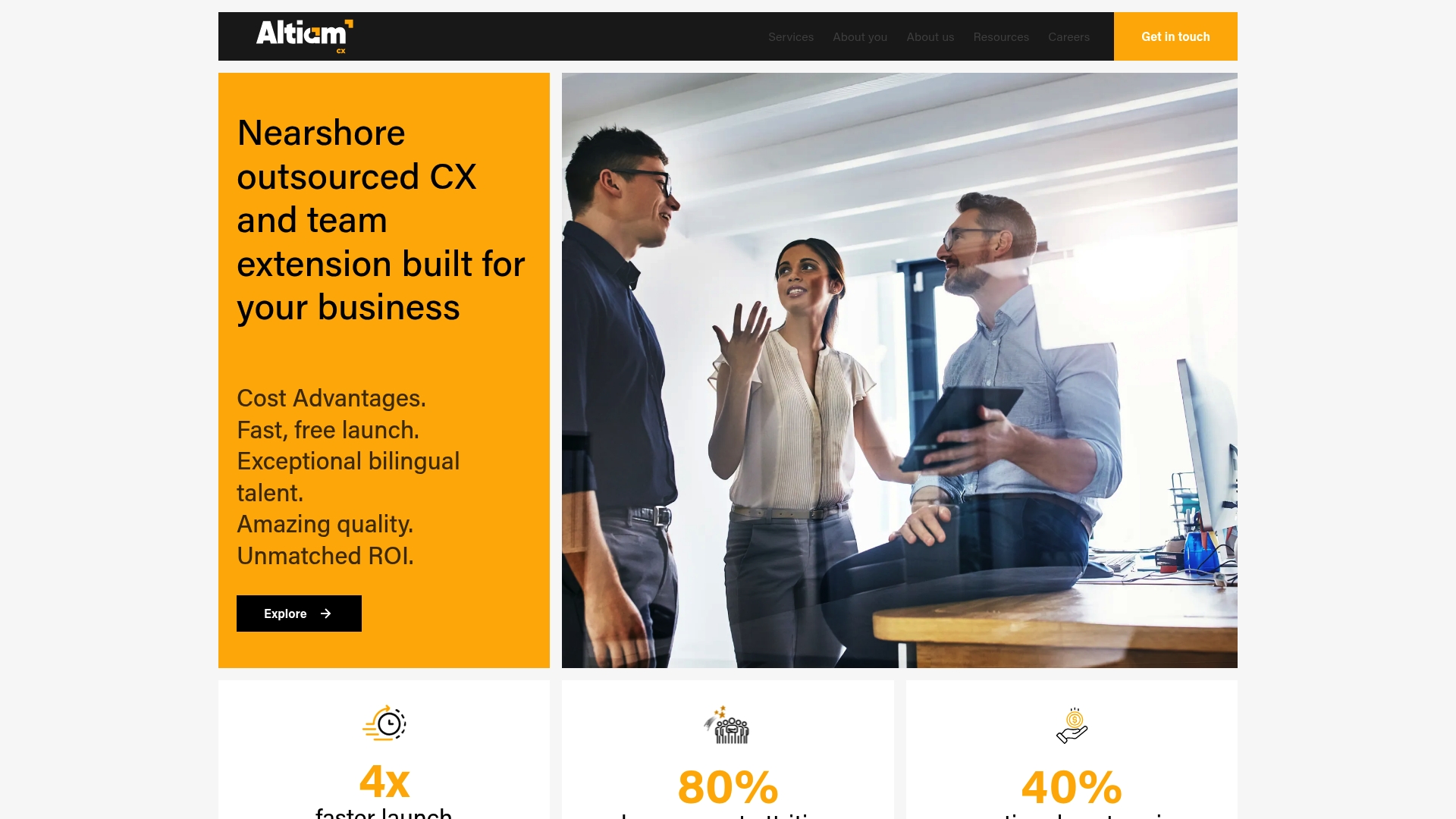
Our nearshore customer experience outsourcing provides scalable support with minimal time zone disruption and strong cultural fit. Organizations gain flexible capacity during peak periods while maintaining service quality through rigorous performance frameworks. Managed team extension services offer specialized expertise for technical support, back-office operations, and customer care without the overhead of building internal teams.
Proven results demonstrate the impact of strategic CX partnerships. One software platform improved productivity by 89% after migrating technical support to Altiam CX, showing how the right partner accelerates operational excellence. Explore tailored CX service options to elevate your customer experience management and deliver measurable business outcomes.
Frequently asked questions
Why is CXM crucial in 2026 for businesses?
CXM directly impacts revenue through retention, lifetime value, and advocacy. Organizations with strong CXM practices differentiate themselves in markets where products and pricing increasingly converge. Customer expectations for personalized, proactive service make CXM a competitive necessity, not a nice-to-have feature.
How does AI impact customer experience management?
AI enables predictive engagement, personalized recommendations, and automated routine interactions that reduce customer effort. It analyzes patterns humans cannot detect, identifies at-risk customers for proactive intervention, and scales personalization impossible through manual processes. However, AI works best when combined with human judgment for complex scenarios requiring empathy and creative problem-solving.
What metrics best measure CX effectiveness?
Customer satisfaction score measures immediate interaction quality, net promoter score indicates likelihood to recommend, and customer effort score quantifies ease of resolution. Track these metrics alongside operational indicators like first-contact resolution, average handle time, and customer retention rates. The most valuable insights come from analyzing metric trends across segments, channels, and journey stages.
How can organizations build customer trust in AI-powered CX?
Transparency about data use, clear communication when AI handles interactions, and easy access to human assistance build trust in automated experiences. Organizations should explain AI recommendations in understandable terms, provide opt-out options for customers who prefer human service, and demonstrate responsible data practices through privacy policies and security measures. Consistent delivery on promises reinforces trust over time.
What distinguishes CXM from traditional customer service?
Traditional customer service focuses on resolving individual issues reactively. CXM orchestrates the entire customer journey proactively, using insights to prevent problems, personalize interactions, and build lasting relationships. CXM integrates strategy, technology, and cross-functional coordination to deliver consistent experiences across all touchpoints, while traditional service often operates as a standalone function addressing problems after they occur.