
TL;DR:
- True omnichannel support requires shared backend data and connected workflows to unify customer experiences across all channels. This integration reduces repeat questions, improves satisfaction, and enhances compliance by enabling seamless handoffs and context sharing. Most organizations fail by adding channels without resolving underlying data silos, making backend system design critical for long-term success.
Customer experience leaders in healthcare, legal, and e-commerce know this frustration well: a patient calls your clinic after submitting a web form, and the agent has no record of the inquiry. A legal client follows up via email after a phone consultation, only to repeat their entire case history. A shopper abandons a cart because the live chat agent cannot see their previous purchase data. These are not isolated incidents. They are symptoms of fragmented support infrastructure. True omnichannel unity requires backend shared data and connected workflows to avoid the costly churn that results from these gaps. This article breaks down exactly how top-performing organizations in three distinct sectors are solving this problem right now.
Table of Contents
- What makes omnichannel support truly unified?
- Healthcare: Omnichannel support in action
- Legal sector: Beyond compliance with omnichannel support
- E-commerce: Personalization and efficiency across channels
- Omnichannel support showcase: Sector comparison
- Most leaders get omnichannel support wrong—here’s why
- Elevate your customer experience with expert omnichannel support
- Frequently asked questions
Key Takeaways
| Point | Details |
|---|---|
| Unified customer view | True omnichannel support provides a single, integrated view of every customer’s journey and data. |
| Sector-specific strategies | Omnichannel best practices differ for healthcare, legal, and e-commerce sectors based on compliance, personalization, and efficiency needs. |
| Beyond compliance | Modern omnichannel systems in regulated industries are used for process improvement, not just record-keeping. |
| Backend integration | Shared backend data and workflows power seamless omnichannel experiences across all channels. |
| Actionable insight | Operational data from omnichannel platforms unlocks new opportunities for efficiency and better service. |
What makes omnichannel support truly unified?
Now that we have set the stage, let us clarify what true omnichannel support means and why so many systems still fall short.
Most organizations already operate across multiple channels. Phone, email, chat, social media, mobile apps. But operating on multiple channels is not the same as delivering omnichannel support. The difference is architectural. A single view of the customer journey, powered by shared backend data and connected workflows, is what separates genuine omnichannel systems from multichannel setups that merely coexist.
Think of multichannel as a series of separate rooms in a building. Each room functions on its own, but they do not communicate. Omnichannel knocks down the walls and installs a shared foundation. Every agent, every touchpoint, and every automated workflow draws from the same source of truth.
To evaluate whether your current platform qualifies, check for these core capabilities:
- Single customer record accessible across all channels in real time
- Cross-channel conversation history that carries context from one interaction to the next
- Shared backend data connecting CRM, helpdesk, and communication tools
- Universal tracking of customer journeys regardless of entry point
- Consistent workflows that do not require agents to manually hand off information between systems
“Without connected workflows, every channel transition is a potential failure point that erodes customer trust and increases operational cost.”
You can explore a guide to seamless CX that outlines these criteria in detail, along with guidance on choosing support channels that align with your audience’s actual behavior. The platform decision matters far less than the underlying integration strategy that powers it.
Healthcare: Omnichannel support in action
With a unified framework established, let us see how these principles unfold in the critical and compliance-driven world of healthcare.
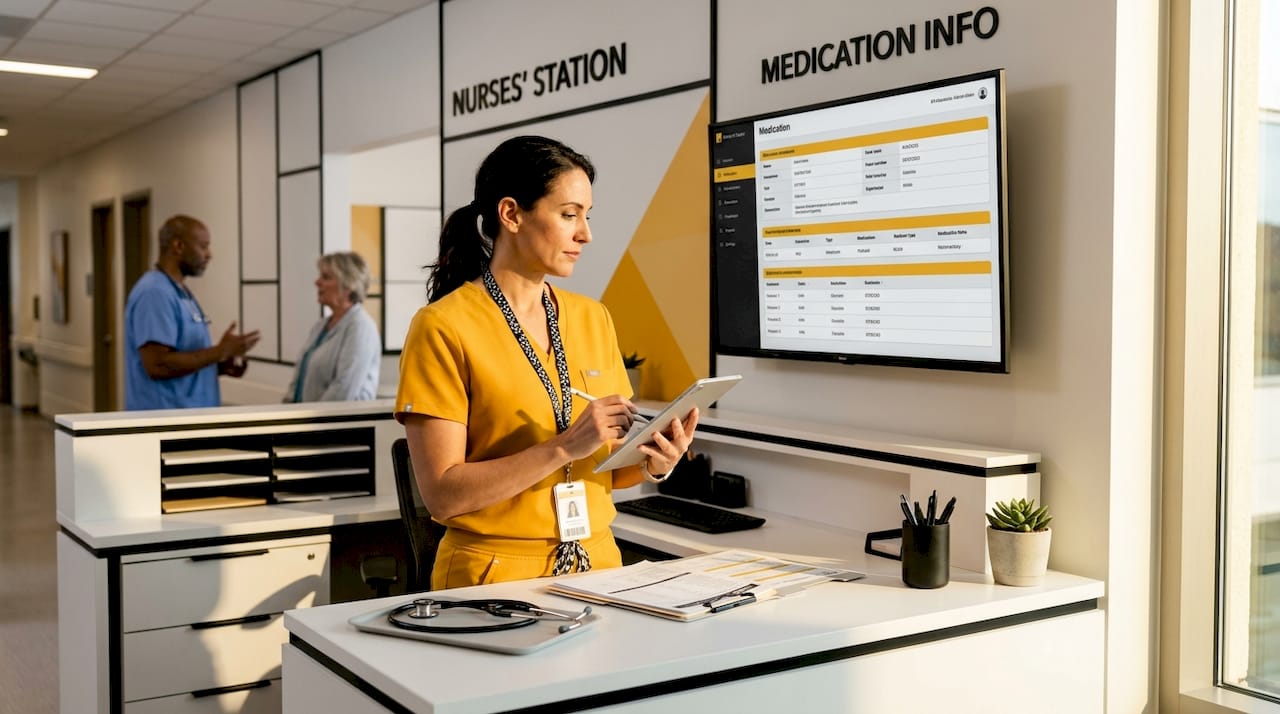
Healthcare is one of the most demanding environments for CX leaders. Patients interact across web portals, phone lines, mobile apps, and in-person visits. Each touchpoint carries both emotional and regulatory weight. Getting this right is not just a customer experience goal. It is a patient safety and compliance imperative.
Here is a realistic scenario showing how a well-integrated healthcare omnichannel strategy operates from a patient’s perspective:
- Patient submits a symptom inquiry via the clinic’s web chat. The system logs this in the shared patient record and tags the inquiry for clinical triage.
- The patient calls the front desk the following morning. The agent immediately sees the web chat inquiry, the patient’s appointment history, and any outstanding follow-ups without asking a single repeated question.
- A mobile app notification triggers a reminder for an upcoming appointment, along with pre-visit instructions automatically pulled from the patient’s care plan.
- Post-appointment, the app sends follow-up care instructions specific to the treatment the patient received, reducing inbound calls about aftercare.
- If the patient responds to the follow-up via SMS, the message routes to the same agent queue and updates the shared record instantly.
The benefits are measurable. Patients ask fewer repeat questions, satisfaction scores improve, and the organization maintains a clear audit trail for compliance purposes. Fragmented systems lead to costly, avoidable churn, and in healthcare, that churn often means patients seeking care elsewhere or disengaging from treatment plans entirely.
Pro Tip: Automate post-visit care instruction delivery through your omnichannel platform using condition-specific templates. This single step reduces inbound call volume for routine aftercare questions by giving patients the right information at the right time, through the channel they already use.
“In healthcare, every missed handoff between channels represents a potential gap in patient care, not just a service quality issue.”
The operational gains extend beyond patient satisfaction. Clinical staff spend less time gathering context at the start of each interaction. Administrative teams handle fewer duplicate inquiries. And compliance officers have cleaner, more accessible records to audit when needed.
Legal sector: Beyond compliance with omnichannel support
As with healthcare, regulatory demands in legal add complexity. Here is how omnichannel strategies deliver much more than compliance.
Legal organizations often adopt communication tools primarily to satisfy regulatory requirements around call recording and data retention. That is a baseline, not a strategy. The firms and legal service providers that extract the most value from omnichannel systems treat compliance as the floor, not the ceiling.
Here are the advanced capabilities that distinguish high-performing legal sector CX:
- Intelligent routing that matches client inquiries to the right practice area or attorney based on case type, language preference, and prior interaction history
- Whisper alerts that surface relevant client details to agents before they answer a call, reducing ramp-up time and improving first-call resolution
- Sentiment analysis that flags distressed clients in real time, enabling supervisors to intervene or escalate before a situation deteriorates
- Automated call summaries that feed directly into case management systems, eliminating manual note-taking and reducing transcription errors
Call recording in legal and finance goes well beyond compliance, enabling training, intelligent routing, and conversational data for measurable service improvement. That data becomes a strategic asset when fed into performance dashboards that identify common friction points, high-value inquiry categories, and training gaps.
Here is a direct comparison of multichannel versus omnichannel in the legal sector:
| Feature | Multichannel | Omnichannel |
|---|---|---|
| Client history visibility | Siloed per channel | Unified across all touchpoints |
| Case routing | Manual or basic | Intelligent, criteria-based |
| Compliance tracking | Channel-by-channel | Centralized and automated |
| Training feedback loops | Periodic and ad hoc | Continuous, data-driven |
| Client satisfaction tracking | Fragmented surveys | Real-time sentiment analysis |
You can explore how this applies specifically in CX for law firms and the broader role of customer care in legal operations to understand where the biggest efficiency gains are hiding in regulated environments.
The operational outcomes are significant. Faster case intake handling, improved accessibility for clients across time zones and language preferences, and a continuous feedback loop that enables service upgrades based on actual conversational data rather than assumptions.
E-commerce: Personalization and efficiency across channels
From legal services to online retail, let us see how e-commerce leverages omnichannel integration for maximum impact.
E-commerce is where omnichannel support meets direct revenue impact. Every friction point in the customer journey has a measurable cost: abandoned carts, returned orders, negative reviews, and lost lifetime value. The organizations winning in this space treat their support infrastructure as a personalization engine, not just a cost center.
Consider this typical customer journey in a high-performing e-commerce environment:
A customer starts a chat session asking about sizing for a product. The chat agent accesses the customer’s order history and notes two previous returns due to sizing issues. Instead of a generic response, the agent offers a personalized recommendation and a direct link to the size guide. The customer does not make a purchase during that session. Two hours later, they continue the conversation via email. The email agent sees the full chat transcript and continues seamlessly. The customer completes the transaction through the mobile app, where a post-purchase confirmation and a returns pre-authorization are already waiting.
This is what unified customer data makes possible: seamless, personalized experiences that prevent customer friction at every stage.
Here is a channel integration and performance comparison relevant to e-commerce support:
| Channel | Integration depth | Average resolution time | Personalization potential |
|---|---|---|---|
| Live chat | High | Under 5 minutes | High (real-time history access) |
| High | 4 to 24 hours | High (full context visible) | |
| Social media | Medium | 1 to 4 hours | Medium (public/private mix) |
| Phone | High | 3 to 8 minutes | High (agent has full record) |
| SMS | Medium | 30 min to 2 hours | Medium (limited screen space) |
Key personalization opportunities in e-commerce omnichannel support include:
- Proactive promotions based on browsing and purchase history surfaced during support interactions
- Streamlined returns initiated within any channel without the customer re-explaining their purchase
- Upsell recommendations presented contextually by agents with full order visibility
- Loyalty recognition that makes high-value customers feel known, not just served
Pro Tip: Integrate post-purchase surveys triggered automatically via your omnichannel platform within 24 hours of delivery. Route negative responses immediately to a human agent for recovery outreach. This single workflow closes the feedback loop and converts potential detractors into repeat buyers more often than any discount campaign.
You can dig deeper into ecommerce support services and practical steps for improving ecommerce support to build a systematic approach to these gains.
Omnichannel support showcase: Sector comparison
Having reviewed sector-specific examples, here is a clear snapshot of what sets top omnichannel performers apart and how you can replicate their success.
The true value in omnichannel support lies in connected workflows that deliver a single customer experience across channels, reducing churn and inefficiencies at scale. That principle holds across every sector, but the priorities shift depending on your operating environment.
| Sector | Primary omnichannel feature | Key benefit | Main challenge |
|---|---|---|---|
| Healthcare | Shared patient records | Fewer repeat questions, compliance | Data privacy regulations (HIPAA) |
| Legal | Intelligent routing and sentiment analysis | Faster case handling, better client outcomes | Complexity of case-specific data |
| E-commerce | Personalization engine | Higher conversion, reduced returns | Volume and real-time speed demands |
When deciding where to focus your omnichannel investment, consider these priorities:
- Prioritize efficiency when your support volume is high and average handle time is a key performance metric. Legal and high-volume e-commerce operations benefit most here.
- Prioritize personalization when customer lifetime value is high and repeat purchase behavior drives revenue. E-commerce and subscription-based services fit this profile.
- Prioritize compliance when regulatory frameworks govern every customer interaction and documentation is non-negotiable. Healthcare and legal top this list.
The lesson that translates across all three sectors is this: start with workflow design before adding channels. Organizations that add new touchpoints without first resolving their backend data sharing create more complexity without any of the benefit.
Most leaders get omnichannel support wrong—here’s why
These sector examples share one underlying lesson. And yet most organizations still fall short for the same predictable reasons.
Many organizations confuse multiple channels with unified omnichannel CX, leading to inefficiencies and poor outcomes that erode both customer trust and internal morale. The conventional mistake is a familiar one: leadership approves investment in a new communication platform, the team launches a chat widget or social media support queue, and the announcement goes out celebrating the organization’s “omnichannel transformation.” But nothing about the backend has changed.
This is where most programs stall. The technology stack is visible and easy to celebrate. The workflow architecture is invisible and unglamorous. Yet it is the workflow architecture that determines whether customers experience continuity or repetition at every channel transition.
Real transformation happens at the intersection of three organizational disciplines: data governance, cross-functional process design, and leadership alignment. A CX leader without executive buy-in for backend system integration will always be limited by whatever the existing silos allow. And those silos are expensive. Every time a customer repeats themselves, every time an agent cannot access prior context, and every time a handoff drops critical information, there is a measurable cost in handle time, satisfaction scores, and retention.
The unified omnichannel approach that consistently outperforms starts with a different question. Instead of “which channels should we add?” the right question is “what does our backend need to look like so that every channel we already have works better?” From that starting point, technology choices become clearer, investment cases become stronger, and results arrive faster. Channels are the interface. Integration is the engine. Leaders who understand that distinction build programs that last.
Elevate your customer experience with expert omnichannel support
If you are ready to move from theory to real omnichannel transformation, here is how you can take the next step with expert guidance.
Altiam CX works directly with healthcare, legal, and e-commerce organizations to implement the kind of connected, scalable omnichannel support that produces measurable outcomes. Our nearshore customer experience model combines cultural alignment, process discipline, and performance frameworks that go far beyond channel deployment.
Whether you are building your first integrated support infrastructure or upgrading an existing operation, our team brings the operational expertise and sector-specific insight to accelerate your results. Explore how we support fast-growth tech organizations and review our nearshore team extension case study to see how real organizations have achieved seamless CX at scale. Start with a readiness assessment and identify exactly where your biggest integration gaps are hiding.
Frequently asked questions
What channels are usually part of an omnichannel support system?
True omnichannel support typically includes phone, email, chat, social media, SMS, and sometimes video or app messaging, all connected through a unified platform with shared data and workflows so agents have full context regardless of entry point.
How is omnichannel support different in regulated sectors like legal?
Regulated sectors use omnichannel tools not just for compliance, but also for intelligent routing, sentiment analysis, and service improvements. Legal omnichannel support moves well beyond recording calls to enable better routing and insight-driven service upgrades based on real conversational data.
What’s a quick way to tell if a system is truly omnichannel?
If agents can view and act upon all customer interactions in one unified workspace without asking the customer to repeat prior context, the support system qualifies as genuinely omnichannel. A single shared view of the customer journey across channels is the clearest indicator.
Why does backend system integration matter in omnichannel CX?
Backend integration ensures all channels share data, preventing the customer frustration that comes from repeated information requests and broken handoffs. Connected workflows and backend data sharing are the essential foundation for any omnichannel system that delivers consistent, efficient service.