
Customer Experience leaders in healthcare and legal sectors face a persistent challenge: optimizing service quality while controlling operational costs. Call volume spikes, inconsistent resolution times, and regulatory complexity drain resources and frustrate clients. A structured, nearshore customer care workflow offers a proven solution, reducing average handling time by up to 30% while maintaining compliance and service excellence. This guide delivers a step-by-step blueprint to design, deploy, and troubleshoot workflows that scale efficiently and deliver measurable results.
Table of Contents
- Prerequisites For Workflow Implementation
- Step-By-Step Customer Care Workflow Design And Execution
- Troubleshooting Common Mistakes And Failure Points
- Performance Measurement And Expected Outcomes
- Tradeoffs: Nearshore Vs Onshore Customer Care Models
- Enhance Your Customer Care With Altiam CX Nearshore Solutions
- Frequently Asked Questions
Key Takeaways
| Point | Details |
|---|---|
| Workflow efficiency | Structured workflows reduce average handling time by 30%, boosting operational performance. |
| Foundation requirements | Compliance training, CRM readiness, and cultural alignment are essential before deployment. |
| Automation impact | Smart automation improves first-contact resolution without sacrificing service quality. |
| Common failure points | CRM integration gaps and neglecting scalability cause workflow breakdowns. |
| Nearshore value | Nearshore models deliver 20-30% cost savings with strong cultural and linguistic alignment. |
Prerequisites for Workflow Implementation
Before designing customer care workflows with nearshore teams, you must establish a solid foundation. Skipping these prerequisites creates vulnerabilities that undermine efficiency and compliance.
First, compliance and data privacy training are non-negotiable for healthcare and legal nearshore teams. HIPAA, GDPR, and industry-specific regulations demand rigorous adherence. Your nearshore partner must demonstrate documented training protocols and audit trails. Without this foundation, you risk costly violations and reputational damage.
Your CRM system must support seamless integrations with nearshore workflows. Fragmented systems create data silos, delay resolution times, and frustrate both agents and clients. Evaluate whether your CRM can handle real-time data synchronization, multi-channel communication, and robust reporting. If integration gaps exist, address them before deployment.
Cultural and linguistic alignment significantly influences customer satisfaction. Nearshore teams in Latin America often share time zones, cultural norms, and English proficiency with U.S. healthcare and legal clients. This alignment reduces miscommunication and builds trust faster than offshore alternatives. Understanding nearshore customer experience benefits helps you appreciate why proximity matters.
An operational framework with disciplined execution and accountability minimizes workflow deviations. Define clear escalation paths, quality assurance checkpoints, and performance expectations. Without this structure, workflows drift, and service consistency suffers. Explore healthcare outsourcing essentials to understand how operational rigor supports sustainable workflows.
Pro Tip: Before committing to a nearshore partner, request documentation of their compliance certifications, CRM integration capabilities, and agent training programs. Verify these claims through reference checks with existing clients in your industry.
- Mandatory compliance training aligned with HIPAA, GDPR, and legal regulations
- CRM systems capable of real-time data synchronization and multi-channel support
- Cultural and linguistic alignment to reduce miscommunication and build client trust
- Operational frameworks with disciplined execution and accountability mechanisms
Step-by-Step Customer Care Workflow Design and Execution
Once prerequisites are in place, follow this proven sequence to design and deploy efficient nearshore customer care workflows.
Step 1: Assess Prerequisites and Ensure Compliance Training
Verify that all nearshore agents have completed mandatory compliance and privacy training. Request certificates, audit logs, and ongoing education schedules. This step is non-negotiable for healthcare and legal sectors. Any gaps here create legal exposure and workflow instability.
Step 2: Map Current Workflows and Integrate with CRM Systems
Document your existing customer care workflows in detail. Identify bottlenecks, redundant steps, and integration points with your CRM. Work with your nearshore partner to map how their systems will connect with yours. Smooth CRM integration is critical; poor CRM integration causes extended resolution times in 40% of nearshore workflow failures.
Step 3: Define Clear Roles and Responsibilities
Ambiguity breeds inefficiency. Define who handles initial client inquiries, escalations, follow-ups, and compliance documentation. Create role-specific playbooks that outline decision trees, escalation triggers, and quality standards. Healthcare customer service best practices emphasize clarity and accountability as foundational elements.
Step 4: Incorporate Automation for First-Contact Resolution
Deploy automation tools targeting routine inquiries, appointment scheduling, and data validation. Smart automation frees agents to handle complex cases requiring empathy and judgment. The goal is to improve first-contact resolution rates without sacrificing service quality. For legal teams, legal client intake workflows benefit significantly from automation that captures client details accurately and routes cases efficiently.
Step 5: Monitor KPIs and Refine Workflows Continuously
Track Average Handling Time (AHT), Customer Satisfaction (CSAT), and First-Contact Resolution (FCR) daily. Use this data to identify workflow friction points and adjust processes. Discipline-driven execution frameworks reduce workflow deviations by 40%, maintaining consistent customer experiences. Agile refinement keeps workflows optimized as call volumes and client needs evolve.
Pro Tip: Establish weekly workflow review sessions with your nearshore team. Use real call data and client feedback to identify improvement opportunities. This cadence keeps workflows responsive and aligned with client expectations.
| Workflow Step | Key Actions | Expected Outcome |
|---|---|---|
| Assess Prerequisites | Verify compliance training, audit CRM readiness | Foundation ready for deployment |
| Map Workflows | Document current processes, integrate CRM systems | Seamless data flow and reduced bottlenecks |
| Define Roles | Create role-specific playbooks, set escalation triggers | Clear accountability and reduced errors |
| Incorporate Automation | Deploy tools for routine inquiries, validate data | Improved FCR and agent efficiency |
| Monitor KPIs | Track AHT, CSAT, FCR; refine processes | Continuous improvement and scalability |
Understanding nearshore outsourcing overview principles helps you contextualize these steps within broader operational strategies.
Troubleshooting Common Mistakes and Failure Points
Even well-planned workflows encounter challenges. Recognizing common pitfalls and implementing corrective actions prevents costly disruptions.
CRM Integration Failures
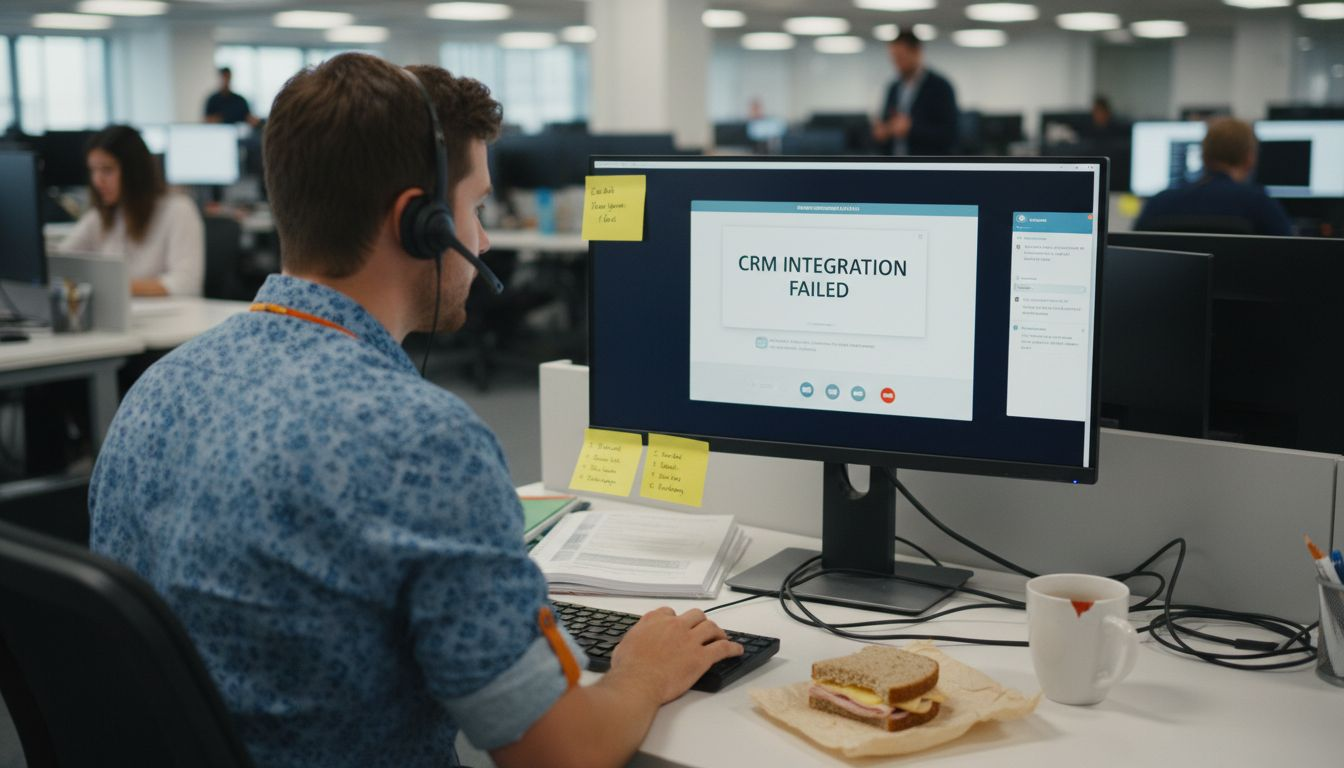
When CRM systems fail to synchronize with nearshore workflows, resolution times extend and client frustration grows. Poor CRM integration causes extended resolution times in 40% of nearshore workflow failures. Test integrations thoroughly before full deployment. Use sandbox environments to simulate real call scenarios and identify data flow issues.
Neglecting Compliance and Privacy Training
Skipping or rushing compliance training increases legal and reputational risks. Healthcare and legal sectors face stringent regulations. A single data breach or privacy violation can trigger lawsuits, fines, and client attrition. Mandate ongoing training and audit agent knowledge quarterly.
Ignoring Scalability During Call Volume Spikes
Workflows designed for steady-state operations often collapse during seasonal or crisis-driven call spikes. Build scalability into your design by cross-training agents, establishing on-call support tiers, and pre-negotiating capacity expansion with your nearshore partner. Integrating nearshore teams successfully requires planning for variability, not just average demand.
Workflow Deviation from Standards
When agents deviate from established workflows, service quality becomes inconsistent. Clients experience different resolution paths, leading to confusion and dissatisfaction. Implement real-time quality monitoring, regular coaching sessions, and performance dashboards. Avoiding common customer service pitfalls demands vigilance and proactive management.
- CRM integration failures delay resolution and frustrate clients; test thoroughly before deployment.
- Skipping compliance training creates legal exposure; mandate ongoing education and audits.
- Ignoring scalability causes service disruptions during call spikes; plan for capacity expansion.
- Workflow deviations lower consistency; monitor quality in real-time and coach agents regularly.
Performance Measurement and Expected Outcomes
Measuring workflow effectiveness requires tracking the right KPIs and setting realistic benchmarks.
Key Performance Indicators
Focus on three primary metrics: Average Handling Time (AHT), Customer Satisfaction Score (CSAT), and First-Contact Resolution (FCR). Expected benchmarks include Average Handling Time under 6 minutes and Customer Satisfaction Scores above 85%. FCR should exceed 75% for efficient workflows. These metrics directly correlate with client retention and operational cost control.

Realistic Implementation Timeline
Full workflow maturation typically ranges from 3 to 6 months. Initial deployment takes 4 to 8 weeks, followed by iterative refinement based on performance data. Expect early bumps as agents adapt and systems integrate. Continuous data monitoring and agile adjustments drive sustained improvements.
Continuous Improvement Framework
Establish a rhythm of weekly performance reviews, monthly deep dives into workflow bottlenecks, and quarterly strategic assessments. Use dashboards that visualize trends in AHT, CSAT, and FCR. Share insights with your nearshore partner and collaborate on refinements. Measuring nearshore team success depends on transparency and shared accountability.
| KPI | Target Benchmark | Measurement Frequency |
|---|---|---|
| Average Handling Time (AHT) | Under 6 minutes | Daily |
| Customer Satisfaction (CSAT) | Above 85% | Weekly |
| First-Contact Resolution (FCR) | Above 75% | Weekly |
| Workflow Deviation Rate | Under 10% | Monthly |
- Track AHT, CSAT, and FCR to measure workflow effectiveness and client satisfaction.
- Expect 3 to 6 months for full workflow maturation with iterative refinements.
- Use continuous data monitoring and agile adjustments to sustain performance gains.
Tradeoffs: Nearshore vs Onshore Customer Care Models
Choosing the right customer care model depends on cost, culture, complexity, and deployment speed.
Nearshore Models
Nearshore teams reduce operational costs by 20 to 30% compared to onshore equivalents. Cultural and linguistic alignment with U.S. clients improves communication and trust. Time zone overlap facilitates real-time collaboration and faster issue resolution. Nearshore models excel for healthcare and legal sectors where empathy and cultural nuance matter.
Onshore Models
Onshore teams offer faster initial deployment and inherent regulatory familiarity. However, labor costs are significantly higher, often 50 to 70% more than nearshore alternatives. Onshore models suit organizations prioritizing speed over cost efficiency or those with highly specialized, region-specific compliance needs.
Hybrid Models
Hybrid approaches combine onshore and nearshore teams, balancing flexibility with cost control. They introduce increased management overhead and coordination challenges. Hybrid models work well for organizations with fluctuating call volumes or those testing nearshore capabilities before full transition.
Decision Framework
Choose based on your specific healthcare or legal client needs, compliance requirements, and growth goals. If cost efficiency and cultural alignment are priorities, nearshore models deliver superior value. If deployment speed or hyper-local regulatory expertise is critical, onshore or hybrid models may fit better. Understanding nearshore customer experience outsourcing and nearshore business advantages clarifies these tradeoffs.
Pro Tip: Start with a pilot nearshore team handling a specific workflow segment. Measure performance against onshore benchmarks before scaling. This approach reduces risk and builds confidence in nearshore capabilities.
| Model | Cost Savings | Cultural Alignment | Deployment Speed | Complexity |
|---|---|---|---|---|
| Nearshore | 20-30% lower | High | Moderate | Moderate |
| Onshore | Baseline | Inherent | Fast | Low |
| Hybrid | Variable | Mixed | Moderate | High |
- Nearshore models reduce costs by 20 to 30% with strong cultural and time zone alignment.
- Onshore models deploy faster but cost 50 to 70% more with higher regulatory familiarity.
- Hybrid models offer flexibility but increase management overhead and coordination challenges.
Enhance Your Customer Care with Altiam CX Nearshore Solutions
Implementing efficient, compliant customer care workflows demands expertise, disciplined execution, and proven frameworks. Altiam CX specializes in nearshore customer experience outsourcing tailored for healthcare and legal sectors. Their teams combine cultural alignment, measurable performance frameworks, and compliance rigor to reduce handling times and improve client satisfaction.

Whether you need to scale rapidly, improve first-contact resolution, or navigate complex regulatory requirements, Altiam CX delivers scalable, reliable solutions. Explore healthcare customer experience insights to understand how Altiam’s approach drives measurable outcomes. For legal teams, legal client intake solutions streamline workflows and enhance client engagement from the first interaction.
Frequently Asked Questions
How long does it take to implement a nearshore customer care workflow?
Typical implementation ranges from 3 to 6 months, with initial deployment in 4 to 8 weeks. Measurable improvements in AHT and CSAT appear within the first 60 days as workflows stabilize and agents gain proficiency.
What are the biggest risks when deploying nearshore healthcare support workflows?
Compliance training gaps and CRM integration failures are the most common pitfalls. Without rigorous adherence to HIPAA and robust system integrations, workflows become unstable and expose organizations to legal and operational risks.
Can automation harm customer satisfaction?
Properly integrated automation improves resolution rates and maintains service quality by handling routine inquiries efficiently. It frees agents to focus on complex cases requiring empathy and judgment, ultimately enhancing customer satisfaction.
Is cultural alignment really that important for nearshore legal customer support?
Yes, cultural alignment significantly influences client trust and communication clarity. Nearshore teams sharing time zones, language proficiency, and cultural norms with U.S. clients reduce miscommunication and build stronger relationships faster than offshore alternatives.
How do I measure if my nearshore customer care workflow is successful?
Track KPIs including Average Handling Time under 6 minutes, Customer Satisfaction Scores above 85%, and First-Contact Resolution above 75%. Use weekly performance reviews and continuous data monitoring to identify improvement opportunities. Integrate nearshore teams successfully by establishing transparent metrics and shared accountability.
Recommended
- CX & Operational Support for Health Systems
- CX & Client Intake Solutions for Law Practices
- Enterprise & Large-Scale CX Support | Altiam CX
- Role of Customer Care Teams: Enhancing Healthcare and Ecommerce
- Master the Same Day Delivery Workflow for UK Couriers
- Empowering Customer Support Teams to Fuel Profit Growth